Behind Unlimited: Lessons and Accomplishments of 2025
July 28, 2026 | Written by Tyler Parrott
Last year, I wrote an article about the lessons and accomplishments that we learned from the first three sets of Star Wars™: Unlimited. It was a pretty popular article, from what I've heard. Since I believe that retrospection is necessary for improving at any skill, I've come back to reflect on the lessons and accomplishments of the second year of the game as well. Before we look forward to Ashes of the Empire and the Galactic Championship, let's look back at the sets that we made two to three years ago and consider what we learned from their design, development, and reception by the player base.
Jump to Lightspeed
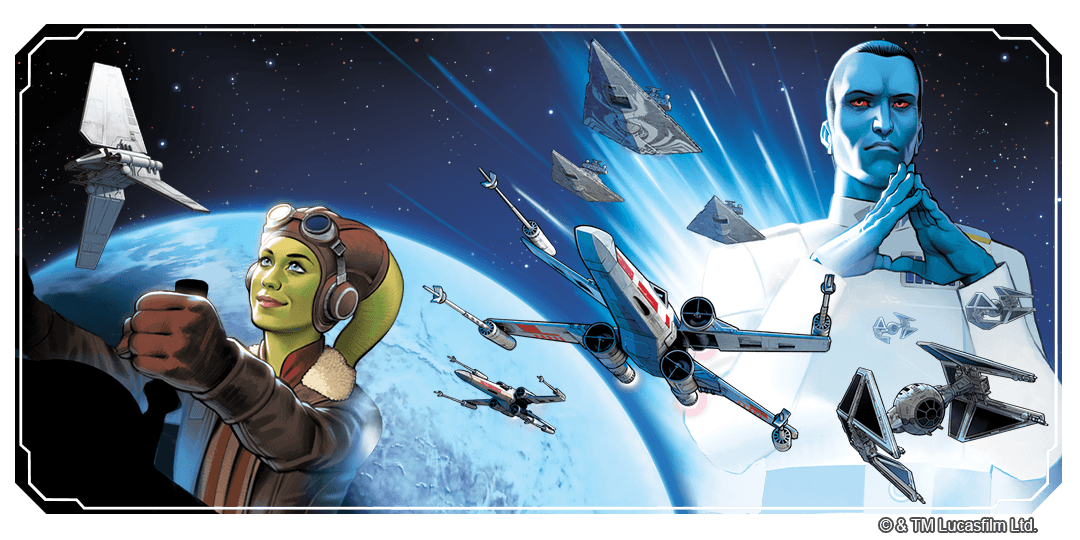
I have mixed feelings about Jump to Lightspeed as a set. As a game designer, there's a lot to love about what we did, especially as it pushed the game into new territory. One of my most prominent memories from playtesting was the excitement and joy of realizing that the quantity of space units in the set really opened up deckbuilding in a fundamentally new and compelling way. But a saying that I've somewhat taken to heart in my life is “your strengths, when taken too far, can become weaknesses” and I think a lot of the things that made Jump to Lightspeed fun and novel also had ramifications we didn't properly account for in the final calculus.
The headliner mechanic of the set was, of course, Piloting. As a mechanic, it has a lot of things that I really like: it's thematic, it provides interesting in-game decisions, and it's immediately visually distinct in a way that makes it stand out as something special. I'm extremely proud of the graphic design team for how well they executed the admittedly complicated request of “can we get a second text box and second set of stats onto these cards?” The fact that they made it happen—and made it look so clean—is super impressive to me, and I think it's an important part of the success of the mechanic.
We knew that pilots would be somewhat polarizing. They're a high-risk, high-reward mechanic (as all upgrades are), though we tried to develop their power level around the fact that they were modal cards that could always be played as units on the ground as a backup plan. I think the Pilot units landed mostly where we expected, especially since most were developed for draft, but the Pilot leaders proved to be more of a challenge than I think we were prepared for at the time.
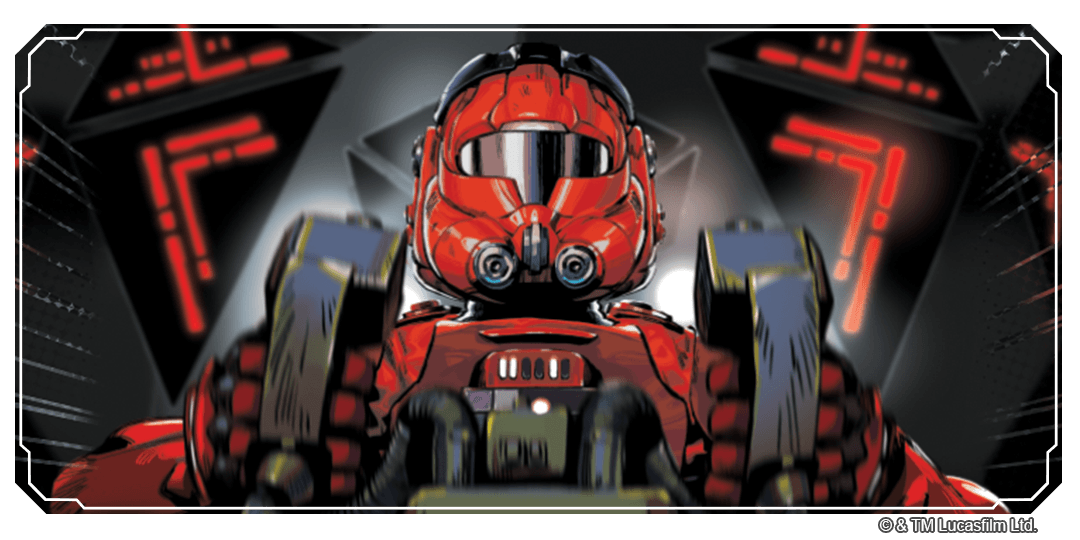
Pilot leaders change the flow of the game by effectively deploying into the space arena. Unlike a normal game of Star Wars: Unlimited, where both players jockey for position in the early game and then crash their leaders into each other in the mid/late game, any game in which a Pilot leader goes up against a non-Pilot leader becomes more of a numbers race, as both players are playing into different primary arenas from each other. The game is at its most fun when both players have lots of options for where to direct their attacks, and when both players are playing into different arenas, you miss out on a lot of that fun. This effect was exacerbated because, in trying to balance the pilot leaders around the upgrade removal that already existed in Spark of Rebellion, we had to make them powerful—so much so that when the opponent doesn't have an answer to them, they can take over a game very quickly.
In addition to the lessons learned from the set's Pilot cards, I think there are also lessons to be learned about the set's mechanical complexity. Individually, Piloting and indirect damage are fine mechanics, but both have a lot of strange corner cases that I think we could have executed better on, especially given that they were in the same set with each other. Both introduce a lot of additional decisions into a game of Star Wars: Unlimited, which can slow down gameplay and sometimes be overwhelming. This was especially true for indirect damage, which escalates in complexity the more you increase the value of damage being distributed. Between the difficulty in balancing indirect damage and the corner cases we had to write into the mechanic to make it work as intended (for instance, the inability to over-assign damage and the damage being unpreventable), I think that, with more time, we could have streamlined the decision points without losing what makes the mechanic fun.
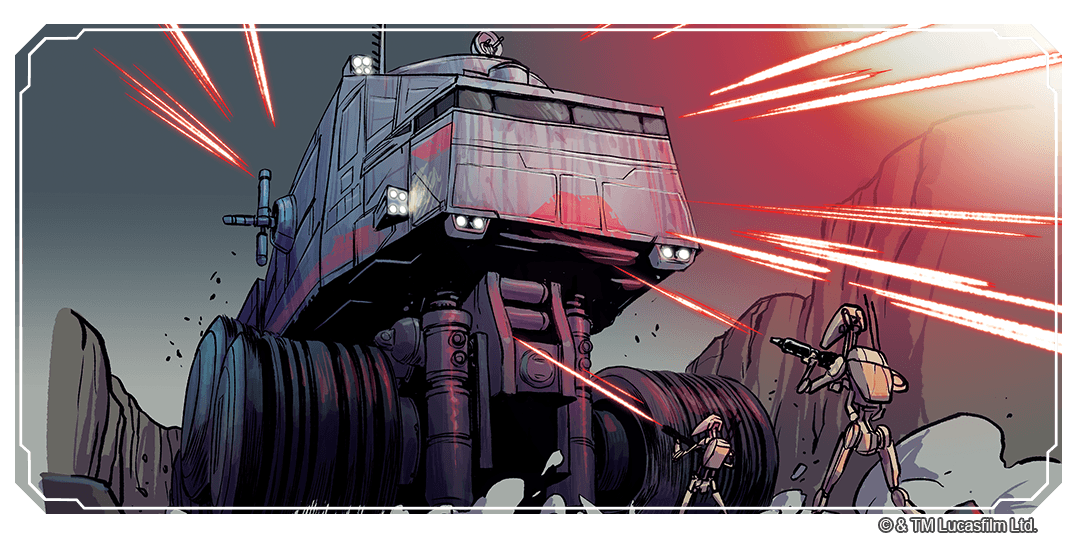
And of course, I can't ignore perhaps the most memorable lesson from the set's development: don't break cards from previous sets. War Juggernaut (Jump to Lightspeed, 170) and IG-2000 (Jump to Lightspeed, 140) were the primary culprits that resulted in the suspension of Jango Fett (Twilight of the Republic, 16) from Premier, and we just didn't spend enough time with Triple Dark Raid (Shadows of the Galaxy, 194) to determine whether it was something we needed to develop around. It's possible we would have decided to take the risk on it anyway (as we did with Force Throw (Spark of Rebellion, 167) in Legends of the Force), but I think there could have been changes made to Devastator (Jump to Lightspeed, 143) that could have made it less backbreaking in combination with Triple Dark Raid specifically.
Ultimately, my assessment of Jump to Lightspeed is that it's a complicated set that would have definitely benefited from more development time. The core design of the set, between piloting and the focus on the space arena, were both really fun and thematic even if both had more baggage than we were equipped to resolve at the time. If anything, the places where Jump to Lightspeed is weakest make me that much more excited to revisit the themes of the set in the future with the benefits of hindsight and a larger, more robust development team.
Legends of the Force
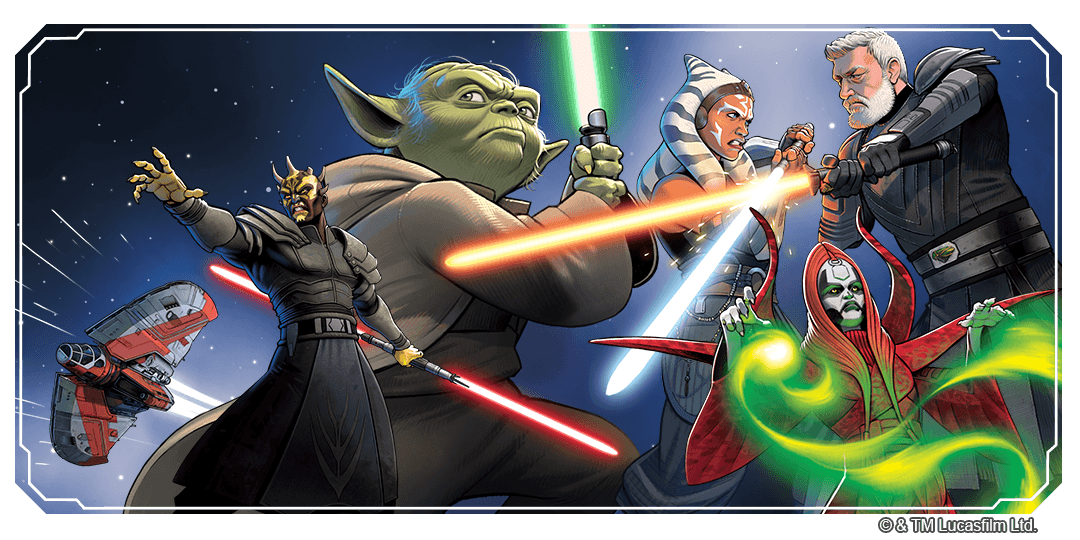
Anecdotally, the most popular set of the year was Legends of the Force. A large part of that was its theme, of course, since Force users are among the most popular characters in Star Wars, but I also think the set itself was just really well developed. For how ambitious we set our goals, the diligence of our game designers and developers paid off by resulting in a set that meaningfully impacted the metagame without overwhelming it. Developing a mechanic as “parasitic” as the Force mechanic (meaning it doesn't have much synergy with other sets) is incredibly difficult, because you're most likely going to end up with a mechanic that everyone either ignores, or which invalidates everything else. Instead, we ended up with a mechanic that some decks wanted to use, but was only one piece of a large, diverse metagame.
That said, the parasitic nature of the mechanic was also an important lesson that we learned from the set. One of the biggest weaknesses of the year, to my mind, is that our sets were so locked in on their specific theme that there was very little to bridge from one set to the next. Not only did the mechanics of Legends of the Force actively discourage players from playing in the space arena (abandoning the mechanics of Jump to Lightspeed), the set also introduced non-Vehicle space units for the first time, meaning the set had even fewer Vehicle units than a normal set; not a great follow-up to a set with Piloting! And because the mechanics of Legends of the Force wanted players to play as many Force units in their deck as possible, the general absence of Force units in either Jump to Lightspeed and Secrets of Power was meaningfully felt.
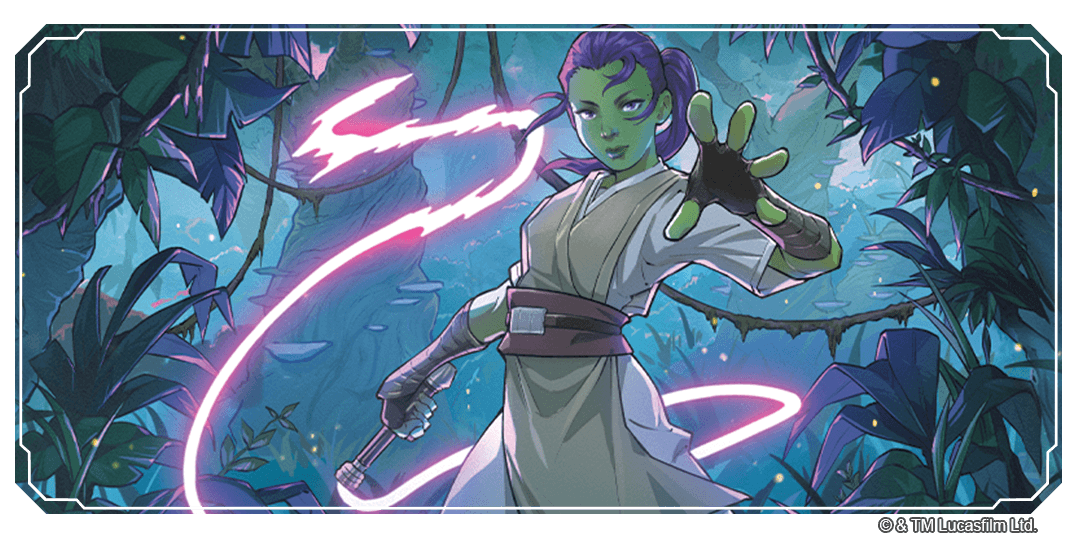
Additionally, while I think we did a great job developing the Force mechanic in the macro sense, we definitely could have done a better job developing it in the micro sense. Some mechanics were well-supported, especially in Vigilance-Villainy and Command-Heroism, but other aspects were given cool payoff cards without sufficient tools to support them. Cunning-Villainy decks relied basically entirely on the existence of Shin Hati (Legends of the Force, 183) and Aggression decks of both affiliations required their second aspect to provide suitable support to get the mechanic to work consistently. Cards that, in many decks, would have been powerful role-players, such as Sorcerous Blast (Legends of the Force, 172) or Mace Windu (Legends of the Force, 149) struggled to find a home outside of draft only because there weren't enough cheap Force units to keep the mechanic consistent.
And a lesson applicable to both Legends of the Force and the next set, Secrets of Power, is that we were definitely still struggling at the time to allocate our rarities optimally. Powerful Uncommon cards in both draft and Premier, such as Ki-Adi-Mundi (Legends of the Force, 146), Kelleran Beq (Legends of the Force, 100), and Chirrut Îmwe (Legends of the Force, 67) all definitely could have (and probably should have) been Rare. Meanwhile, there were Rares such as the T-6 Shuttle 1974 (Legends of the Force, 47), Death Field (Legends of the Force, 141), and Premonition of Doom (Legends of the Force, 203) that certainly should have been Uncommon in their place.
But for all these lessons, I actually think the set turned out really well. We went in with a goal to alter the metagame (around 2-cost units especially), and we achieved that goal. The stronger 2/4 units have had a lasting impact on the game line, both in terms of how we can develop our first turn plays and also in slowing down the speed of the early game after the blistering starts that were enabled by Spark of Rebellion and Jump to Lightspeed. The Force mechanic got its moment in the spotlight at last year's Galactic Championship and hasn't been eclipsed by the sets around it, with Obi-Wan Kenobi (Legends of the Force, 8), Mother Talzin (Legends of the Force, 2), and even Qui-Gon Jinn (Legends of the Force, 16) and Darth Maul (Legends of the Force, 9) making top cut finishes in post-rotation tournaments. And, of course, the theme was incredibly popular. Star Wars fans love lightsaber wielders and Force users, so making a set around the concept was a great way to get people excited to try out new cards and strategies.
Secrets of Power
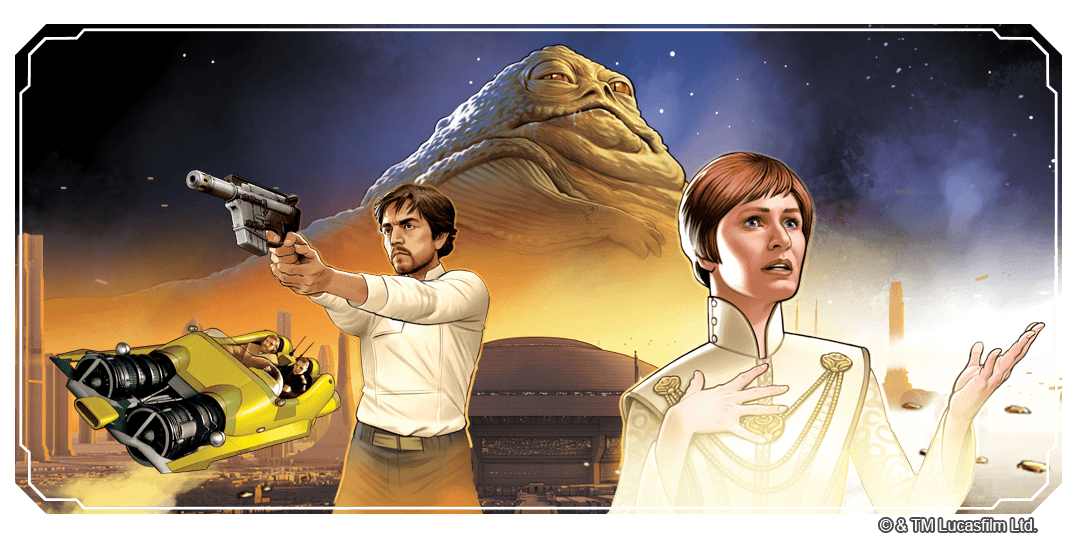
This brings us to Secrets of Power. Obviously, I'm biased about this set, as I led the vision, design, and development of it. And I think it got some things very right! But I also think it missed the mark in several places. It was a risky set to begin with, as the set's theme was focusing on one of the least-popular elements of the franchise, but ultimately some strong cards and a good draft environment made it successful.
The biggest accomplishment of the set, I think, is definitely its draft environment. Draft is a format I think about a lot, and so Ryan Serrano and I dedicated a lot of time and effort to making sure there were cards for every leader in multiple aspect combinations (with the primary card pool in the leader's own aspect), that the leaders were fun and worth drafting around, and that there was a variety of strategies to build around that were all worth pursuing. Disclose really got to shine in that environment, as limited access to cards meant that players had to meaningfully engage with the deckbuilding puzzle that disclose asks of you, and judging when (or even whether) to save cards for disclose remained interesting throughout the experience.
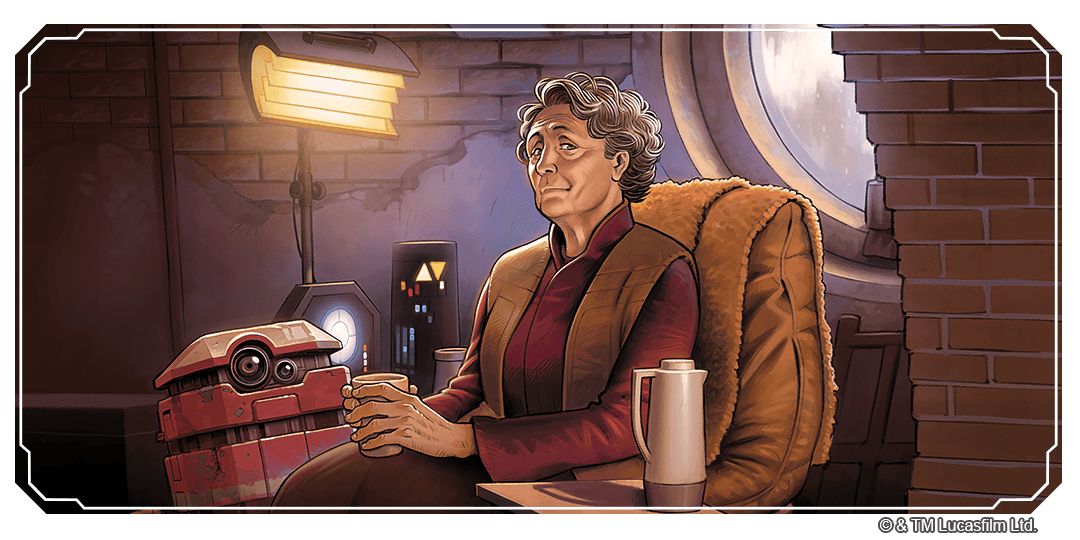
One of our goals going into the set's design was to give a little bit of support to a lot of different strategies, especially strategies from past sets. It was in part to alleviate the anti-synergy I noted between Jump to Lightspeed and Legends of the Force, but also to acknowledge the sets of 2024 and give those cards one final hoorah before they rotated out of Premier. The fact that Secrets of Power was designed in conversation with the sets around it (this was also true of disclose, which was designed to support the upcoming multi-aspect theme of A Lawless Time) I think is a huge strength of the set, and one that I'm especially proud of. However, we didn't account for the fact that it came at the cost of promoting the set's own themes and archetypes.
This leads to, I think, one of the set's biggest lessons, which is that impact matters. The power level of the set was the lowest of the three sets of 2025, something that was especially felt in the Premier environment. That's not to say that there weren't powerful cards—Queen Amidala (Secrets of Power, 101) and Karis Nemik (Secrets of Power, 148) are both extremely impactful in the format—but overall there were a lot of cards that were developed for Premier that missed the mark.
This was most especially felt in the leader lineup. We were so focused on experimenting with new design space that we didn't have the time to properly develop them into something powerful, and many leaders were insufficiently supported. Even those that were powerful for us internally, such as Jabba the Hutt (Secrets of Power, 2) and Dryden Vos (Secrets of Power, 7) ended up missing in the public metagame, as we failed to adequately test them against the full gauntlet from previous sets. I'm personally the most dissatisfied with C-3PO (Secrets of Power, 15). While he ended up where he was largely out of necessity, as we had run out of time after trying a dozen or so previous designs that consistently failed to land properly, I wish we had pushed his exhaust ability more given how much weaker exhaust leaders have turned out than we thought they would be in general. (In retrospect, I think his ability should cost 0 resources and his On Attack ability maybe shouldn't be conditional.)
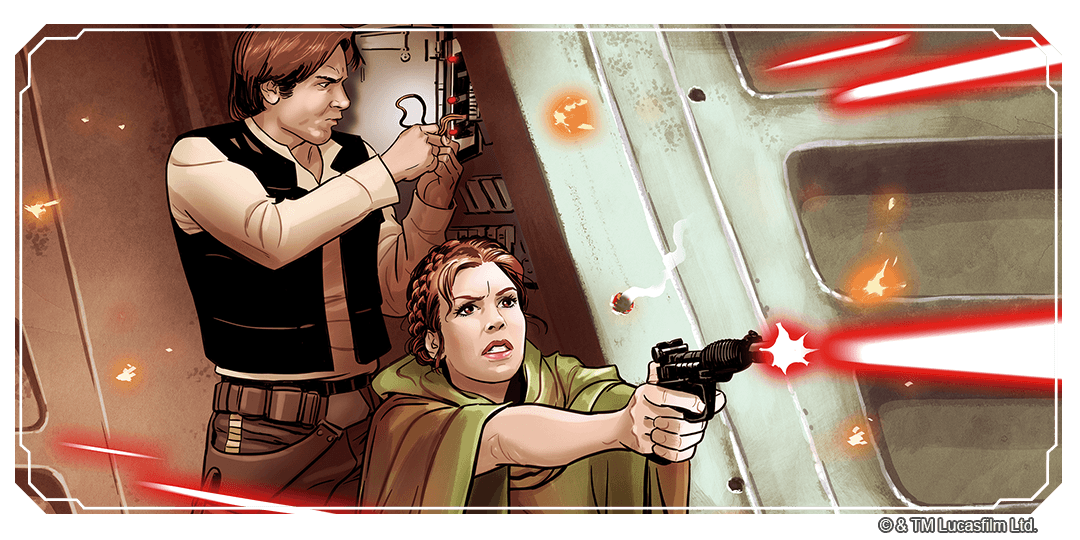
Both Spy tokens and the Plot keyword were fun and interesting mechanics that ended up being a bit underpowered compared to what we'd normally want from our headlining set features. Queen Amidala (Secrets of Power, 101), Karis Nemik (Secrets of Power, 148), Chancellor Palpatine (Secrets of Power, 82), and Faith in Your Friends (Secrets of Power, 211) all have seen competitive success, but they're basically the only Spy generators to do so, and I think we definitely could have further pushed some of our non-unit cards that created them, including I Am the Senate (Secrets of Power, 92). There are slightly more Plot cards that have made a competitive splash, but I didn't succeed at my goal of incentivizing players to wait on deploying their leader to push their luck. Perhaps if the cards were a bit more intentionally strong, we could have encouraged players to put more of them in their deck and therefore tactically delay their leader deployment more often.
More so than even Legends of the Force, this was the set to miss most on its Legendary-rarity cards. Many of them are definitely still strong for their cost, but because the metagame doesn't support them, they didn't make the impact that we hoped or needed from them. This made the set feel unique and novel, but not immediately desirable because so many of the cards didn't have a home until after rotation when A Lawless Time released. Cassian Andor (Secrets of Power, 42), Dryden Vos (Secrets of Power, 137), Director Krennic (Secrets of Power, 90), and Darth Traya (Secrets of Power, 188), for instance, are all cards that could be powerful in the right context, but do require specific support to be high-value metagame players, and that support hasn't been present.
Outside of the competitive Premier metagame, I think Secrets of Power is a compelling set full of unique and boundary-pushing designs. These are the kinds of cards that cater to deckbuilders and encourage creativity, so are particularly valuable to sustain the long-term success of a hobby game like Star Wars: Unlimited. We're going to do our best to keep making designs like that, and my hope is that next time we do it with a little bit more power behind them, so that our future sets can have a more meaningful impact on the metagame on release.
Looking Forward into 2026
With the second year of the game now fully behind us, and with many more sets yet to be released, I'm encouraged to see the way that we're growing as game designers and developers for Star Wars: Unlimited. When we started previewing these cards over a year ago, I was so excited for the players to see how much better these three sets were than the sets before them. And since then, I've seen that much of that excitement was well-placed, but also that some of our successes had unforeseen costs or consequences. Now, as we find ourselves in the middle of 2026's set releases, I feel the same overwhelming excitement, and I'm sure we'll learn from these sets as well. As long as each year gets better than the last, I continue to see a long future for this game line.
That said, the sets of 2025 have taught us some valuable lessons about designing for this game. In the time since these sets were finished, we've been discussing and prioritizing some specifics, such as:
- Designing towards a resonant theme can lead to extremely exciting and desirable cards and mechanics.
- The themes of our adjacent sets need to support each other in a synergistic way.
- Power is important, and allocating power to the correct rarity is important as well.
- Even when a mechanic is fun and flavorful in a vacuum, we have to consider its ramifications on the rest of the gameplay loop
- Leaders are the face of the game, and so deserve to be given more development attention than the rest of the cards in the set.
A Lawless Time and Ashes of the Empire have both benefited from the lessons learned from 2025, as have Homeworlds and Icons 2027, which I'm excited to start talking about later in the year.
Until next time, may you feel inspired to try something new.
Share This Post