Insights to Ashes
July 30, 2026 | Written by Ryan Serrano
As we look forward to the release of Ashes of the Empire—the exciting next set of Star Wars™: Unlimited—we wanted to get some insights behind the set's design. As the second set to release since the game's first instance of rotation, there are lots of things to be excited about when it arrives this July. With that in mind, we asked Ryan Serrano of the Star Wars: Unlimited design team to share his thoughts. Read on to see what he had to say!
Can you share some insights about how the game's eighth set, Ashes of the Empire, came to be? What led to the set's theme being focused on the end of the Galactic Empire and the period that came after it?
Ashes of the Empire's thematic and mechanical journeys were very different. We knew from our very first meeting to plan out Year 3's sets that we wanted one set to be an era-focused set, and we were quickly drawn to the aftermath of the fall of the Galactic Empire, as represented in shows like The Mandalorian, Ahsoka, and The Book of Boba Fett. Members of the design team really enjoy these shows, and we haven't devoted considerable weight to the era since Shadows of the Galaxy, so it felt like a natural thematic direction, and we never looked back! What spoke to us immediately was the era's pervasive sense of uncertainty. With the collapse of the central Imperial power structure, characters must choose what kind of future they want to build: will they band together with others or strike out on their own?
Mechanically, the set changed numerous times in development. We originally conceived of Year 3 as the “year of aspect-matters,” with A Lawless Time introducing the first multi-aspect cards and Ashes of the Empire and Homeworlds adding new cards and mechanics that built on that foundation. Ashes of the Empire, as the middle set of the three, originally was built around mono-aspect cards to provide a contrast to A Lawless Time. However, we found through testing that there was too little crossover between the sets, and that our aspect system doesn't lend itself to three straight sets building mechanics around it. We pivoted to several interlocking mechanics that supported the thematic experience we wanted players to explore, while also prioritizing the sequencing puzzle that forms the heart of Star Wars: Unlimited strategy: Advantage tokens, Mandalorian tokens, and the Support keyword.
Ashes of the Empire introduces Advantage tokens to the game. What led to the creation of these upgrades that provide a temporary power boost, and what unique design advantages (ha) do they provide compared to the persistent Experience tokens?
Advantage tokens were one of several token ideas that Tyler wanted to explore in the game, and when we introduced them internally, they were an immediate hit. They very naturally encourage players to think about unit combat and action sequencing, since they are temporary and are defeated as soon as a unit attacks or defends. Thematically, they represent a fleeting, fortuitous battlefield circumstance that a player can capitalize on to swing combat in their favor, so they mostly appear on Aggression and Cunning cards. Since they don't provide the long-term value of Experience tokens, they can be costed much more aggressively, so you'll see Advantage tokens appearing at a higher rate than Experience tokens in previous sets. The decisions around when to give your units Advantage tokens and when to attack an opponent's units to defeat their tokens leads to a lot of interesting choice-points, something we feel makes games much more interesting!
Ashes of the Empire also introduces Mandalorian token units to the game. What led to the design of these token units, both thematically and mechanically? How did the decision to give them the Shielded keyword come to be?
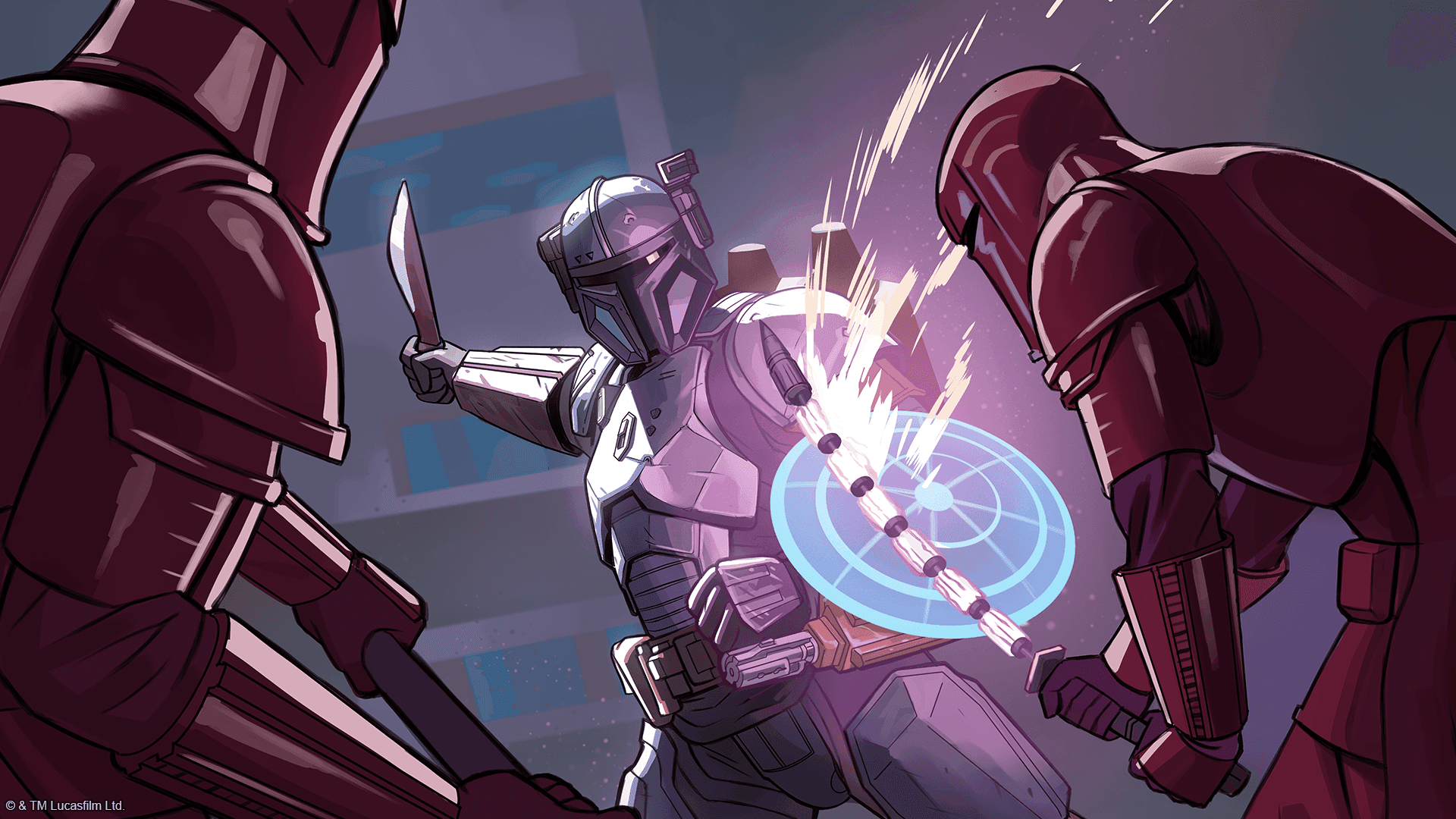
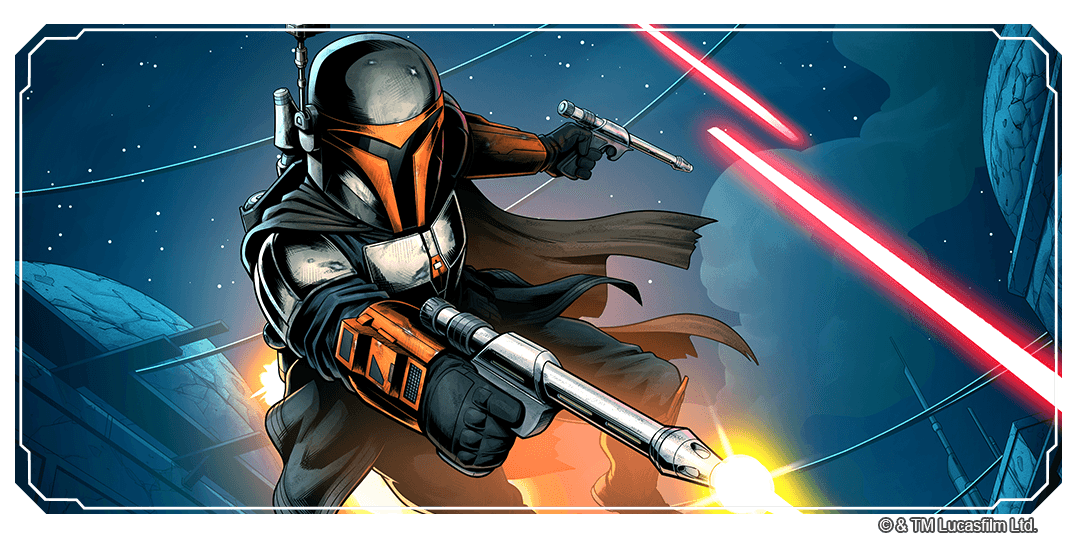
It wouldn't be a set focused on the era of The Mandalorian series without a bunch of Mandalorians flying around! Back when we developed Spy tokens for Secrets of Power, we were interested in a cheap unit token that could be generated at a good rate, or as an extra incentive for playing certain cards or using certain abilities. A Mandalorian token represents the opposite idea: a unit with a good stats and a protective shield that lets it effectively fight other units. Mandalorian units allow a player to build a board efficiently that is in less danger of being immediately removed by opponents. Having more units on the board supports “go-wide” payoffs and lets players have more targets for upgrades, thematically fitting for the Mandalorians of this era and passively allowing for more sequencing decisions.
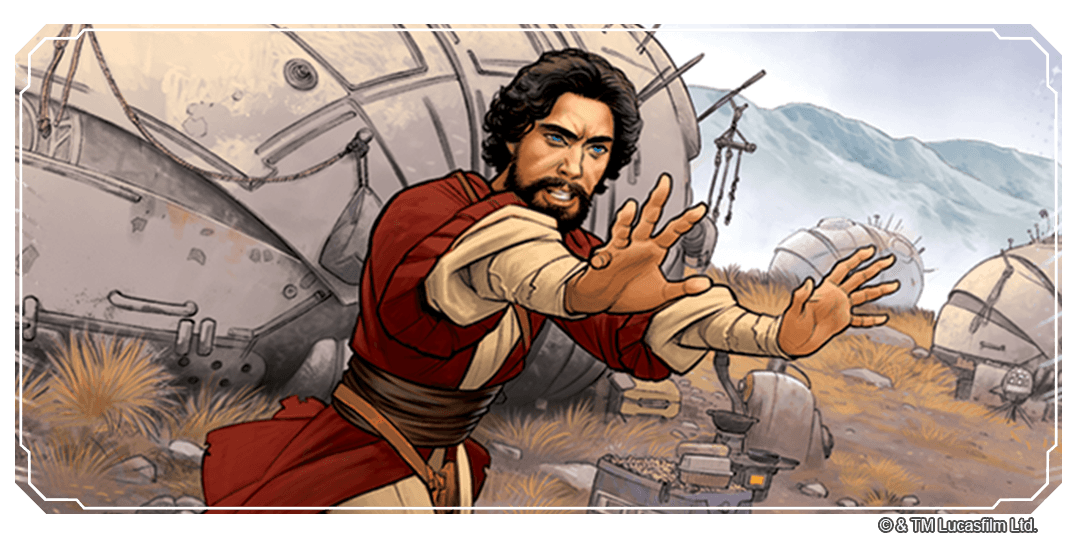
Speaking of keywords, the new Support keyword opens up all sorts of new strategies and sequence puzzles. What are some of your favorite interactions with this keyword? What strategies involving it should people look out for?
The Support keyword as it appears in Ashes of the Empire was the last mechanic added during development, after a previous iteration that exhausted units already in play proved too slow and restrictive. Support in many ways is a continuation of abilities that have already existed in the game since Spark of Rebellion, like Snowtrooper Lieutenant (Spark of Rebellion, 236) and Fleet Lieutenant (Spark of Rebellion, 240). However, its true power unlocks by granting the supporting unit's abilities to the attacking unit. Players now can surprise their opponent with abilities they didn't expect, maybe even turning the tide in a battle with a clever Support attack after their opponent disregards a ready unit! Some of our favorite interactions have been with higher-cost Support units, as a way of getting value from an ability that wouldn't normally be able to trigger until the following turn, or with Support cards that have specific restrictions on their abilities, like Ezra Bridger (Ashes of the Empire, 209), which feels satisfying to set up and then pull off in a game. Once you learn the card pool, you can also bluff certain Support cards by how you sequence your turn, making your opponent play around something you may not even have in your hand.
The release of Ashes of the Empire is sure to shake up the competitive metagame, especially in the weeks leading up to the Galactic Championship. What should competitive players keep in mind when this set enters the Premier format?
Be wary of any opponent who leaves a ready unit in play, and think about what Support units they can afford to play alongside it!
Have a plan for how to deal with a wide board of Shielded units, whether it's a timely -2/-2 event or a Saboteur unit in your sideboard.
Don't let Support's action compression fool you into thinking the meta will be nothing but aggressive strategies; control decks get some strong tools in Ashes of the Empire as well, and you'll need to be able to deal with them too.
Without spoiling too much, what about Ashes of the Empire has you the most excited?
As a set built around sequencing decisions, we're very excited to see what kind of synergies players will be showing off at the Galactic Championship, and if any players find any special tech that surprises the meta. As fans of the shows the set is built around thematically, we're also excited to see the characters from those shows receive a little bit more of the spotlight in the game for a while, particularly the leaders. And some members of the design team have been waiting a long time for some of the new Legendaries to be revealed, so they can put them in decks. Expect a lot of Ashes of the Empire cards in our decks if you play in any Designer Duels at the Galactic Championship!
Share This Post