Lawless Insights
January 28, 2026 | Written by Danny Schaefer, John Leo, and Joe O'Neil
As we fast approach the release of A Lawless Time—the thrilling next set of Star Wars™: Unlimited—we wanted to get some insights behind the design of the new set. After all, A Lawless Time stands in the unique position of not only being the next set for the game, but also the set that releases alongside the game's first rotation. With so much to talk about, we asked Danny Schaefer, John Leo, and Joe O'Neil of the Star Wars: Unlimited design team to share their thoughts. Read on to see what they had to say!
Can you share some insights about how the game's seventh set, A Lawless Time, came to be? What led to the set's theme being focused on heists, outlaws, criminal masterminds, etc.?
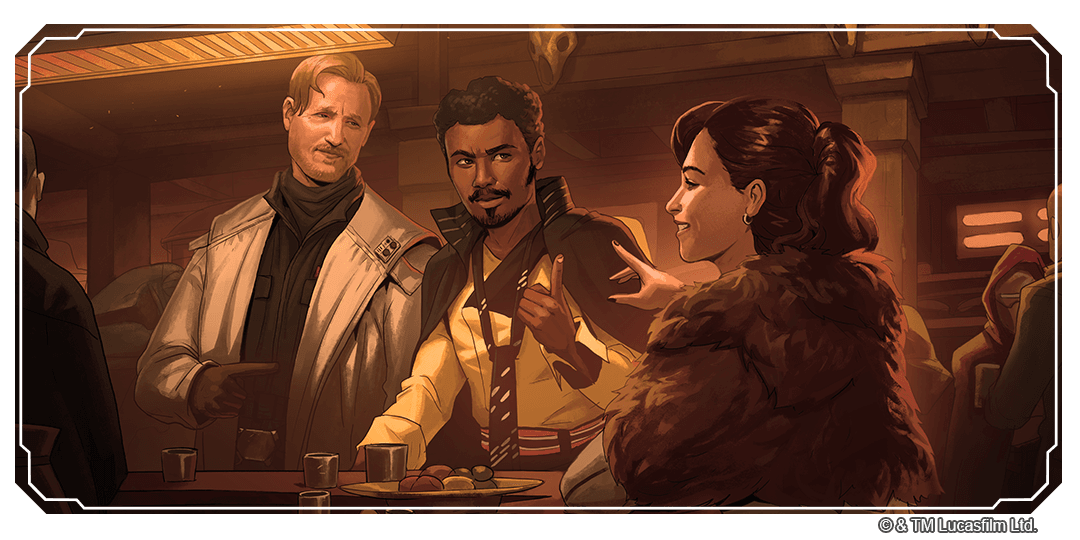
John: Pretty early on, the design team was invited to pitch ideas for future Star Wars: Unlimited sets. As a lover of the underworld elements of Shadows of the Galaxy, I wanted to approach those themes from a new perspective. I wanted the set to introduce a contrast between preparation vs improvisation. A Lawless Time was the working title for this set, and never changed throughout development. Its identity never changed!
Joe: This set came to be because of John Leo. It was his vision that I was very happy to help realize; I actually joined the project a little later in its development, so the concepting stage was mostly him. It's a theme John was very excited to get into our game, and he had a pretty clear vision from the get-go.
The release of A Lawless Time marks the first instance of set rotation for Star Wars: Unlimited. How did the knowledge of that rotation shape the design process for this set?
John: Going into this project, my co-designers and I knew this set would be our first rotational “hinge.” As such, we approached it with a sense of responsibility: when key staples leave the environment, which cards should arrive to fill the void? And meaningfully, how can this fresh environment blossom, how can it have a new texture? We knew that Credit tokens were a part of that calculus, and the rotation of the first batch of rare bases. Our goal was to create a new environment that would feel fresh and bold, while still remaining unapologetically Star Wars: Unlimited.
Joe: It was a constant conversation for us during development. The game should feel different than its first 2 years, but we also have to make sure that we replace important effects that are woven into the game's fabric at this point. What removal events do we want control decks to run? What typal synergies do we want in the game now that the Rebel-trait package from Spark of Rebellion is gone? It's an exciting time in the game's history where we can redefine how Star Wars: Unlimited plays, but we also have to make sure it remains the same fun game we all know and love.
Danny: Rotation is an exciting moment! We've known from the outset that this set would mark the first rotation in the game's life and approached this pivotal moment with intentionality, ensuring that the new format feels fresh and different while maintaining foundational elements that are core to gameplay and deckbuilding. Much of the groundwork for rotation was actually laid far in advance, as we designed cards in Jump to Lightspeed, Legends of the Force, and Secrets of Power with the knowledge that they could become post-rotation staples. But, of course, A Lawless Time development is when we truly defined what the new format would look like—not just by virtue of the absence of cards that have defined the metagame since the first set, but by establishing what effects would take their place.
A great example are “ramp” effects that put extra resources into play, like Superlaser Technician and Resupply. We consciously avoided printing any of those effects at low cost in year two to leave ourselves the flexibility to rotate them out if we wanted, and that decision paid off when we settled on Credits as a core element of A Lawless Time. With Credits providing an alternative path to playing expensive cards ahead of schedule, we felt it would be healthiest to back off on cheap resource ramp for a while. Players will still be able to get to those big cards, but the path to do so looks a lot different post-rotation.
Similar dynamics exist for leaders, bases, aggressive units, finishers, and various other effects. Perhaps the example that will have the largest impact, though, is the change in the suite of removal events available. The first three sets provided some powerful answers to a variety of threats. Power of the Dark Side, Fell the Dragon, Confiscate, Bamboozle, Waylay, Bombing Run—these cards all helped define what decks were actually viable by putting pressure on certain cards and strategies. The calculus changes significantly with those cards gone. While plenty of removal still exists, it comes at different points in the cost curve or with different restrictions, completely changing what answers you'll have to consider when building your deck.
With the first set rotation also comes the launch of the Eternal format. What can players look forward to experiencing when they mix A Lawless Time with the game's first three sets?
John: The introduction of our common base cycle is meaningful in enabling some combinations that may not have been plausible in the first rotation. Consider the fan-favorite infinite combo by combining Grand Inquisitor: Hunting the Jedi, Darth Traya: Lord of Betrayal, and Tragedy of Plagueis. Normally, this would require playing at least one of the pieces “out of aspect,” but with the introduction of A Lawless Time's common bases and Credit tokens, it can be powered out a bit earlier and with a little more consistency. This is the sort of connective tissue that can bring a lot of excitement and depth to the Eternal format.
Joe: There are cards we designed in A Lawless Time that we felt were acceptable in power level because they would not be in the same rotation cycle as cards from the first three sets. When these cards were mixed together, even just one set past rotation, you can make some combos that feel like you're getting away with something you shouldn't. It makes the format really fun and unpredictable. Mixing Credit tokens from this new set with a lot of the ramp cards like Superlaser Technician and Resupply from Spark of Rebellion is a great example. You can get huge units in play way earlier than you ever could before.
Danny: I can't wait to see what players do with the Eternal format! We found so many exciting decks while playing the format internally, and I'm sure we just scratched the surface. What really amazed me was just how different Eternal felt from the previous Premier format, even with just one additional set. The ability to combine cards and find synergies that were never developed for Premier leads to some incredibly fun deckbuilding opportunities. And the options only expand as more cards continue to release, between Ashes of the Empire, Homeworlds, and the Twin Suns decks.
Some of the decks that excite me the most when building for Eternal are those that can do things that were never before possible in Star Wars: Unlimited by combining elements from A Lawless Time with cards from the first few sets. Probably my favorite deck so far has been using Han Solo (Audacious Smuggler) and combining cards like Resupply with the Credit-generating cards from A Lawless Time to power out expensive units incredibly early in the game. Nothing feels better than having a Krayt Dragon in play on round 3! I also had a ton of fun exploring decks built around Lama Su (We Modified Their Genetics) making use of the full selection of inexpensive Grit units and powerful upgrades to often end the game with just 2 or 3 attacks.
But Eternal is so much more than these combo-oriented decks that push the limits of what's possible. One of the coolest decks I've seen is Tyler Parrott's take on Hera Syndulla (Spectre Two) that incorporates all of the new Spectre units from A Lawless Time to incredible effect. And maybe the developer with the highest win rate in our internal games was Ryan Miles keeping it simple and just playing an upgraded version of Jango Fett (Concealing the Conspiracy) with classic favorites like Tarkintown and Triple Dark Raid.
One of the shiny new features of A Lawless Time is the introduction of the Credit token. What led to this token's creation, and how did the team go about designing and balancing it?
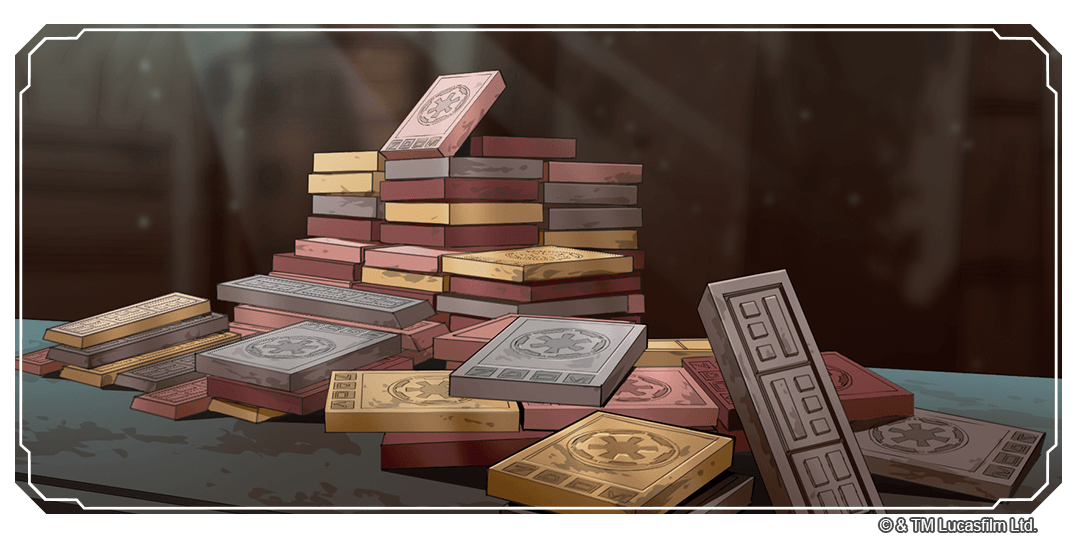
John: Credit tokens were always part of the initial pitch for A Lawless Time. It felt exciting to open the design space as a direct contrast to our existing resource acceleration strategies. We thought, “what if ramp looked different?” Instead of Superlaser Technician and Resupply, we might see more “bursty,” explosive strategies that would leapfrog you ahead of your opponent in the short term, but without the long-term advantages of earlier leader deploy and permanent acceleration.
Joe: A big part of balancing the credit token was being careful with the amount of resource ramping in Premier along with counterplay. We made sure there were ways to remove early huge units as well as ways to interact with enemy credit tokens.
A Lawless Time also introduces the game's first “multi-aspect” cards. What sort of unique challenges did you tackle while designing these cards? How did you go about balancing them?
John: The biggest challenge in designing these cards was making sure they felt interesting and fresh. With a new design space like this, we wanted to make sure a Cunning-Vigilance card feels like it's “earned” both of those aspects. Sometimes it's as simple as providing a keyword that aspect can't usually access: Look at Sullustan Sapper (A Lawless Time, 81) as an example of the first Aggression card to gain Ambush since the very first set of Star Wars: Unlimited! Sometimes, however, it's a bit more complicated, and we come up with an ability that could really only exist in a combination of multiple aspects. I love Hondo Ohnaka (A Lawless Time, 94) as an example of a card that feels not just Cunning and Vigilant, but as a unique blend of both.
Joe: A lot of our game's balance is based on how narrow a card's uses are. The more aspects a card has, the fewer decks it can go into. These 3-aspect cards are a first for the game and let us try to push things that we wouldn't have in the past. It's also important to recognize that these cards can be played in a variety of decks thanks to the new common bases. It's of course a difficult balancing act, but it's something that we paid a lot of attention to during development.
This set has a wide representation of characters from throughout the Star Wars franchise. What led the team to choose which characters to appear in A Lawless Time?
John: There was a great conversation with Ryan Serrano and Tyler Parrott when they were designing Secrets of Power. We knew A Lawless Time would be introducing multi-aspect leaders for the first time, and we were certain we wanted Saw Gerrera (A Lawless Time, 1) to be the game's first Command-Aggression leader. At the time, there was a Saw Gerrera leader in Secrets of Power, and we did a little bit of haggling to get him where he needed to go.
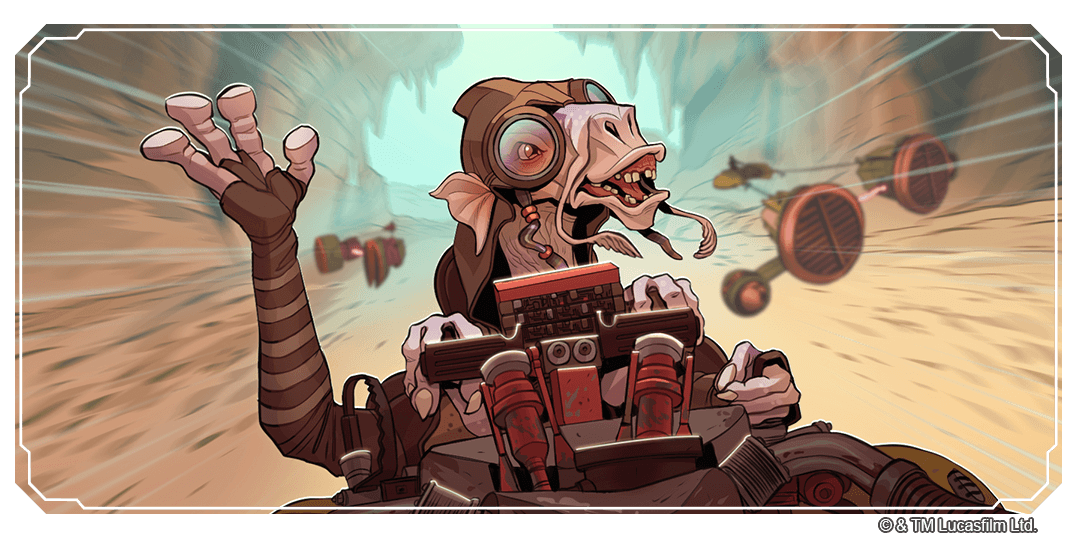
Also, Sebulba (A Lawless Time, 12).
Without spoiling too much, what about A Lawless Time has you the most excited?
John: Being able to rebuild my favorite archetypes from playtesting with beautiful, tactile, amazing cardboard. My [redacted] ramp deck, [redacted] combo-control, and of course, [redacted].
Joe: The new life that this set gives old leaders. I think some leaders from previous sets that people have slept on will suddenly become quite strong. I also think old leaders will start running new aspects that they didn't in our past meta. I love deckbuilding and I'm so excited to see what the addition of Credit tokens, multi-aspect cards, and the new common bases add to the pool and what our fans will come up with.
Danny: What I'm most excited about is seeing all the new decks that emerge in a post-rotation world. While some Jump to Lightspeed space-arena decks and Legends of the Force Force-trait decks have found success already, I expect far more possibilities to open up for those archetypes once rotation hits. I also am incredibly excited for the new decks that will come out of A Lawless Time. The set has some of the coolest and most innovative leader designs we've ever made, and it also has some abilities that I truly never expected us to do until John and Joe put them on a card. Credits and multi-aspect change the game so much, and I can't wait to see what incredible decks shake out.
Are there any additional thoughts about A Lawless Time that you would like to share?
John: This was the first set in which I was involved from beginning to end, pitch concept to delivery. It's been a true journey, and I'm so excited to see how the community receives it. Thanks for playing!
Joe: I think this is such a good time to jump into the game. It will have a fresh feeling with a lot of exciting cards. I'm very proud of how this set turned out. It has very simple mechanics overall, great for new players, but it's added so much to the mechanical depth of our game thanks to how it plays with our pre-existing aspect system. John Leo knocked it out of the park and I'm so happy to have been a part of this project with him.
Share This Post