Behind Unlimited: On Making Difficult Sacrifices
February 26th, 2026 | Written by Tyler Parrott
You may have heard an old writing axiom: “don’t be afraid to kill your darlings.” It’s a piece of advice often given to authors when they have to make the difficult decision to delete scenes, chapters, characters, or plot threads that might be fun and cool on their own but are taking away from the greater whole of the work. That advice sometimes applies to game designers as well, and I learned that in a very personal way while developing the Plot mechanic for Secrets of Power. So, what happens when a mechanic doesn’t quite make the cut? And how does it feel when the final call has to be made?
The Original Vision
In a previous article, I outlined how the mechanics of Secrets of Power came to be. And in that article, I outlined the original vision for the Plot mechanic. The goals I had for the mechanic were clear: it would revolve around hiding information from the opponent, it would involve waiting to achieve its greatest benefit, it would have a dramatic moment of revelation, and the opponent could interact with it. When I thought of all these things, a mechanic from a previous beloved Fantasy Flight game came to mind: the agendas of Android: Netrunner. It was a tremendously fun game of bluffing and bluff-calling, asking players to declare attacks against facedown, unknown targets with only context clues to guess what those targets could be. Since Star Wars™: Unlimited already allows players to choose between a variety of targets when declaring an attack, I thought it would provide a ripe opportunity for inspiration.
Therefore, my original vision for the Plot keyword looked like this: a player could “initiate” a plot facedown at their base with a progress counter on it (the idea was that we would provide progress counters in the spotlight decks). Each regroup phase, all active plots would gain 1 progress counter automatically to escalate the game state. When a player took their turn, they could play one of their face-down plots as if it were in their hand, reducing its cost by 1 for each progress counter on it.
The opponent, however, could attempt to foil their opponent’s plots by attacking it with a unit (in either arena)—the plot would immediately be placed in the discard pile, but the attacking unit would be dealt damage equal to the amount of progress on the plot. It meant that plots were always at risk, but with careful maneuvering you could either trick your opponent into wasting time foiling plots or you could protect your plots with Sentinel units and existing board control tools. It also gave units with high HP and low power a unique utility, as they were particularly good at foiling plots even if they weren’t good at doing other things.
The game states this produced were extremely fun. Players had tons of agency to control their resources, and since players were encouraged to take risks to play some very powerful cards, they were more often playing direct bluffing games with their opponent. We made sure to include several traps among the pool of Plot cards so that players could more effectively bluff: attacking a trap would result in extra punishment (beyond just the attacking unit taking damage) but it came at the risk of doing nothing if the opponent chose to ignore it. After only a couple playtest games, I was in love with the way the mechanic reshaped the progression of each game.
Growing Complications
Despite how much Ryan and I loved the gameplay, not everyone shared our view. Many of our playtesters found the mechanic overwhelming to play with because of how much flexibility it offered you in playing your cards, and nearly all of them found the logistics of having some of their cards face-down on the table annoying to play with. There were already players who had trouble keeping track of Smuggle cards in their resources, and now we were asking them to check another zone of face-down cards they could play, and these ones had important markers (often dice) on them! Having the cards face-down on the table also introduced the concern that they could get confused with (and mixed up among) a player’s resources.
Additionally, there was also a real complexity issue that I had known about from the beginning. In order to keep Star Wars: Unlimited accessible to a more casual player base, we try very hard to make our new mechanics straightforward to comprehend and entirely explained on the cards. But it was simply impossible to explain how Plot worked on any card with the mechanic. It felt so intuitive to me, and the gameplay was so fun, that I was certain this complexity was merely another obstacle to overcome. I proposed that we solve two problems with a single solution: just like what we had done with the Force token in the previous set, we could have a “Plot token” that appeared in booster packs—it would function more as a reference card than an actual game piece, but it could be placed on top of face-down plots to differentiate them from resources and it could contain the necessary rules for how plots work such that players would (almost) never be without an explanation.
The reminder text on cards would cover the first half of the mechanic:
- (Pay 1 to initiate this card facedown as a plot with 1 progress. It gains 1 progress each round and costs 1 less for each progress.)
Meanwhile, the reference card would cover the rest of how the mechanic worked:
- (You may play this plot. It costs 1 less for each progress on it.)
- (If a plot has no progress on it, defeat it.)
- (At the start of the regroup phase, progress each friendly plot.)
Together, this felt like an extremely effective (if somewhat inelegant) solution.
But there was one more complication that I didn’t have a solution for: the mechanic required game automation. Something Danny and I learned from designing previous games is that players often struggle to keep track of game pieces they aren’t directly interacting with. It’s not that they can’t keep track of everything that’s happening on the board, but the more we require players to keep track of every card interaction all the time, the more likely they are to miss something. And with humans having limited brainpower, we wanted our players to be focused on fun strategic decision-making, not “did I remember to add progress to my plots last round?”
My Refusal
Despite the mechanic’s high complexity, both in comprehension (it required an entire reference card to explain) and in gameplay (it required players to keep track of a lot of face-down cards that were constantly changing costs), I was committed to proving that it could be as fun for everyone as I found it to be. I iterated on the reminder text and reference card to help players understand how the mechanic worked. Ryan and I listened to the playtester feedback and looked for ways we could help guide players towards the most fun versions of the mechanic and away from the ones that were causing trouble. Ryan’s design acumen was particularly valuable here, as he was quickly able to adjust individual card designs that were leading people towards overwhelming game states and back towards what we wanted them to be doing, which was playing a bluffing-heavy version of Star Wars: Unlimited.
This was actually a process that we spent quite a lot of time and design hours on. We intuitively understood that playing a deck full of plots would be strategically problematic because it spent a lot of time setting up for the future, but playtesters kept building decks with lots of plots, playing all of the ones they drew, and then reported feeling overwhelmed. Sometimes, it was frustrating to see playtesters not enjoying their games, the same frustration you feel when you’re trying to explain something to someone and they’re just not getting it. I was so certain that this was a mechanic that would lead to something fun and dynamic, and that all it would take was the right combination of card designs and players would be taking risks and outsmarting their opponents just like I wanted them to.
It was around this time that a “Great Simplification” was being addressed across the three sets of 2025. Danny had concerns that, while any individual mechanic could be acceptable, the combination of Piloting, the Force mechanic, and Plot was making the constructed environment overwhelmingly complex. This was obviously true for the Force mechanic of Legends of the Force, the earlier design of which involved incrementally gaining a Force resource every time a Force card was played and then spending those resources in differing amounts to activate abilities. It was telling to Danny that both Legends of the Force and Secrets of Power were working with mechanics that required counting lots of numerical minutiae with new counter types and trackers. It was asking a lot from players to simultaneously keep track of how many Force resources they had, how many regular resources they had, and also all of the progress on their plots. The game was quickly devolving into an untenable math puzzle that was turning even experienced game designers away.
I made the case (with Ryan’s help) that Plot was not the problem in all this. It was helped by the fact that Secrets of Power had the longest remaining development time by being the third set of the year, but it was largely driven by the fact that I still believed in the mechanic and I didn’t want to give it up. The Force mechanic would be overhauled (as described in Designing Legends of the Force) and Plot continued as a mechanic to be iterated on. But the more we worked with it, the more I could feel the tension between the goals that Danny had laid out and what we were doing with Plot. It crept up on me like a shadow of dread, each new design adjustment feeling heavier than the last as we continued to search for ways to direct playtesters towards deckbuilding decisions that wouldn’t overly tax their mental energy. Eventually, when I was awake in the middle of the night thinking about the set while jetlagged at the Cannes International Games Festival in 2024, I sent a message to Ryan:
“I think Plot goes against what Star Wars: Unlimited is supposed to be, but I’m going to fight for it anyway.”
Once it was put to words, I knew in the bottom of my heart that the version of Plot that Ryan and I had worked so hard to design would never make it to print, no matter how much we loved it.
Searching For Answers
The fate of the mechanic was sealed when we met with Danny and members of studio leadership to get a pulse check on the progress of the set. Jim and Danny played a game with decks that Ryan and I had prepared, and with both of them talking about their thoughts and feelings as they had them, it became clear that the amount of bookkeeping required for the mechanic was excessive. We discussed what the specific pain points were and whether they could be resolved, and Ryan even had some potential solutions on-hand in case of this exact situation. But the constant recalculation of the costs of each plot card was too much of a challenge for even experienced players to easily manage, and creating a new face-down zone that was distinct from resources was too much of a liability, especially when considering the Organized Play team’s concerns about the effect of accidental game state losses by mixing up face-down cards.
Even though I had gone into that meeting with the expectation that we would have to cut the mechanic from the set, it was still a disappointment. It felt like my personal contribution to Star Wars: Unlimited had been rejected, and that a dream I had been working towards had not only been taken away from me, but that it had been locked away forever; there was no amount of revision that would make this mechanic work if I wanted to try again in a future set. And to have it happen fairly late in the set’s development was scary. Would we even find something satisfactory to use for Plot? Or would we have to settle for something unsatisfying in order to meet a deadline?
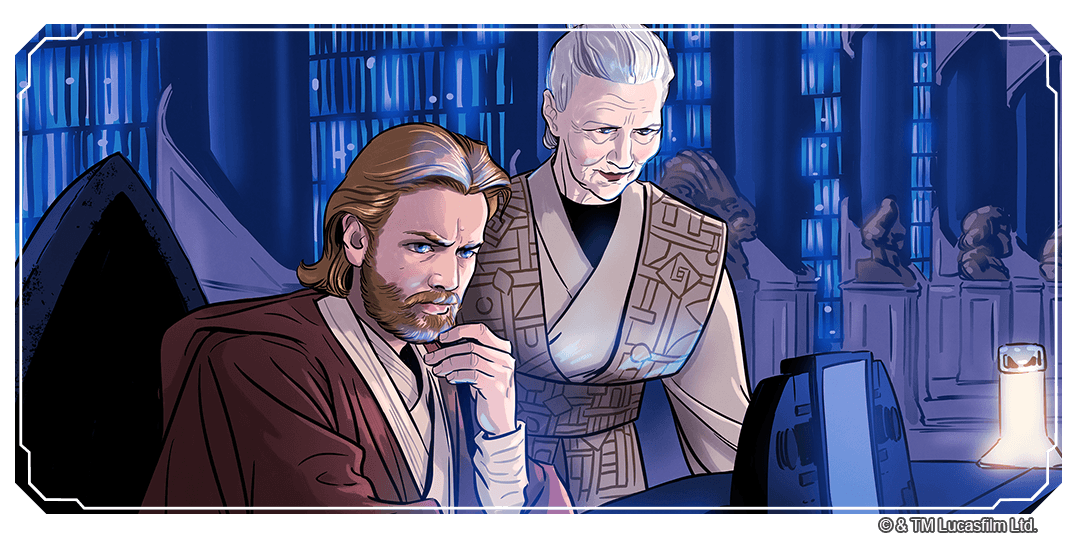
To try to find a replacement for Plot, Ryan and I had to go back to the bullet points that I had originally given as the experiential goals of the mechanic: long-term planning, explicitly hidden information, a moment of dramatic revelation, wait as long as possible, and interactable by the opponent. Could we find a mechanic that still achieved these goals, but didn’t involve extensive math and allowed our plots to be hidden among the resources instead of a new zone? Plots being hidden among a player’s resources would sacrifice the “explicitly hidden” and “interactable by the opponent” goals, but it definitely achieved the “long-term planning” and “hidden information” goals.
This was when, in a stroke of good fortune, Danny and I randomly got lunch with Senior LCG Lead Designer Nate French. We chatted about game design, and I filled him in on the unfortunate situation that Ryan and I were in with the sudden loss of one of our key set mechanics. Nate reminded me that we should be designing towards the elements that make Star Wars: Unlimited unique, rather than trying to copy mechanics from other games, and proposed some wacky leader designs that hit at some of the experiential goals I had outlined for the Plot mechanic. To Nate, they were just “cool ideas that we could use for leaders at some point down the line,” but to me, they were the seeds of a solution.
A specific design he suggested was a leader who, at the start of the game, got to hide a card facedown beneath them. Then, when that leader deployed, they would reveal and play the card. It was kind of like what Kylo Ren (Legends of the Force, 1) was doing in the previous set, but with a “hidden information” twist. He was inspired by the idea that your opponent would know you were hiding something from them, but without knowing exactly what it was. It checked many of the boxes for me: “explicitly hidden,” “long-term planning,” and “dramatic moment.” Was there a way to make a mechanic that allowed every leader to do this? If so, could we design it towards a play pattern that encouraged players to wait past their normal deploy round so they could push their luck and try for more plots? After over a week of floundering, I felt like I finally had hope for something fun.
I pitched the mechanical idea to Ryan, and he was skeptical. While we had both known that we would probably need to change the mechanic in some capacity, the loss of all of the exciting individual card designs that he had created was still fresh in his mind. And to be honest, I wasn’t even sure what I was suggesting was the right idea. I had been thinking about it for a few days, and the more I thought about it the more it felt like everything was coming back together, but I was afraid that my newfound excitement could be misleading me. Not only did I need Ryan to be on board with the idea as my design partner, I also needed confirmation from someone I trusted that this idea was a good one and I wasn’t running into another dead-end.
After Ryan thought about the mechanic for a few days and played with it, he started getting excited about the new mechanical idea as well, and I allowed myself to really enjoy the newfound excitement of a promising idea. With my relief at finding a new mechanic that fulfilled my experiential goals, I would have been more than satisfied letting the common plots be straightforward and even a bit bland. But Ryan had higher standards than that, putting his mind to ensuring that every single plot in the entire set had a unique use, and that nearly all of them required skillful tactics to reach their full potential.
I may have designed the final iteration of the Plot mechanic, but I could never have done it without Nate’s inspiration and Ryan’s detail-oriented creativity.
Outro
In the end, I do think the version of Plot that we ended up putting in Secrets of Power is a better Star Wars: Unlimited mechanic than the one that I originally pitched in the vision. From the beginning, I had a clear vision for what I wanted the play experience of the set to be, and an equally clear vision for exactly how I wanted to create that experience. I wanted people to feel the passage of time as their plots ticked up, and I wanted players to engage with risk (either as the one initiating the plots or as the one attacking them), and I wanted players to feel the allure of waiting “just one more round” to get that extra discount. But what I wanted ultimately wasn’t what was best for the game. This is why I’m lucky to have such a great team of game designers working around me: having a diversity of perspectives, all working towards the same goal, means that nothing goes unscrutinized and none of us accidentally stray too far from the heart of what makes Star Wars: Unlimited as special as it is.
This is why, despite how painful it is to do, I think the “don’t be afraid to kill your darlings” writing advice is valuable. When your goal is excellence, listening to feedback is critical. Sometimes the most effective person you can learn from is the person who disagrees with you, or who has no attachment to your work. They will give you the most honest perspective of where your work is succeeding and where it isn’t. It’s probably never going to be fun or comfortable, but sometimes the best thing you can do for the success of the whole creative endeavor is to sacrifice some of the individual pieces along the way.
Until next time, may you feel inspired to try something new.
Share This Post