Behind Unlimited: On Character Selection
December 4, 2025 | Written by Tyler Parrott
So far this year, I’ve written a lot about game design as it pertains to Star Wars™: Unlimited. But there’s a whole separate part of my job that I have yet to write about! For those who don’t know, my official job title is “Creative Lead of TCGs” (of Star Wars: Unlimited, specifically), which means I actually do a lot more than just game design. I also interface with the visual teams (mostly art), and I provide oversight and guidance on all of the creative text that appears on the cards. Given that, I thought I’d spend some time today writing about some of the considerations that go into creative decisions as they relate to game design: how do we take a fun game and make it feel integrated into the Star Wars experience?
Bottom-Up and Top-Down
Many times, people have asked me how we design Star Wars: Unlimited, only to be surprised when I describe it as a “bottom-up game designed around its mechanics, not its theme.” That was certainly the reaction to many of the current designers on the team when they were first being onboarded into our design processes! We’ve gotten a lot of positive feedback on how much the game “feels” like a Star Wars experience, so players are surprised to learn that most cards are not designed to match the character.
For those unfamiliar with the terms, “bottom-up” and “top-down” refer to a way in which a game experience could be designed. Bottom-up game experiences are created as game mechanics first, with a theme applied afterwards. Top-down game experiences are created with the theme first, with game mechanics designed to attempt to match the prescribed theme. Neither one leads to inherently better or worse game design, as each has its own strengths and weaknesses.
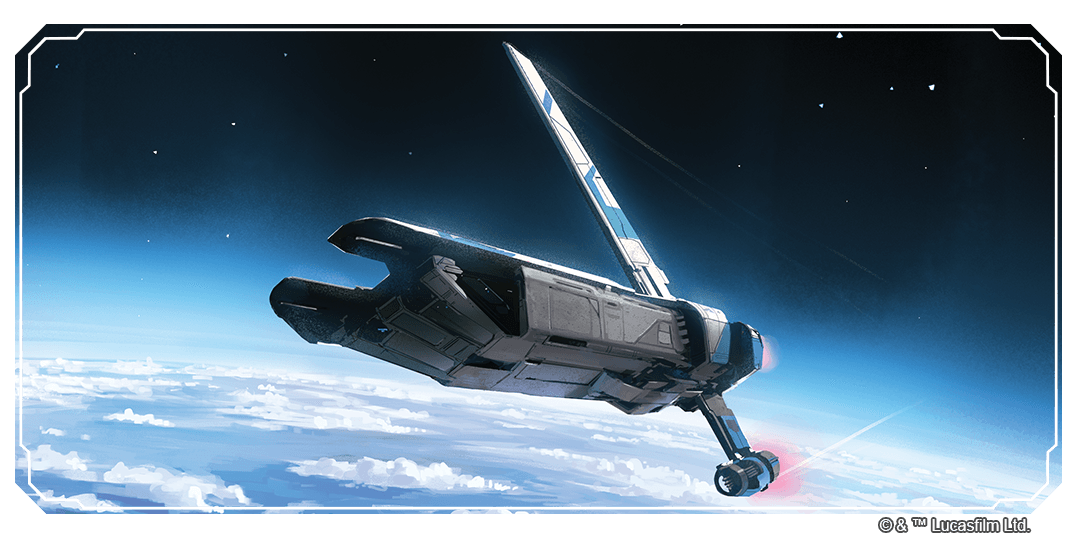
To use the core mechanics of the game as an example: most of the Star Wars: Unlimited game mechanics were designed independent of the Star Wars theme. Having a hand of cards, placing resources and exhausting them to pay for costs, playing cards and attacking with units, having a leader that provides a unique deckbuilding or strategic identity; these are all mechanics that we came up with because we wanted to make a fun game. They were therefore designed bottom-up: we started with the game mechanics and primarily use the card concepts (combination of card titles, subtitles, and art) to make the mechanics feel like they’re building a Star Wars experience. Even the leader deploying as a unit is mostly just a game mechanic, although it was derived from the desire to highlight the importance of the Star Wars character that a player chose to build their deck around. The one core Star Wars: Unlimited mechanic that I would describe as top-down is the two arenas. The separation between space and ground doesn’t need to exist to make the mechanical game loop fun, but it does need to exist to make the game feel like Star Wars. Conveniently, good game design makes the distinction between bottom-up and top-down designs difficult to distinguish, because the theme and mechanics feel so integrated that neither can be imagined without the other.
Set Themes versus Card Designs
One of the reasons players don’t perceive Star Wars: Unlimited as being designed bottom-up is because of how we approach set themes. When we create the vision for a set, it often starts with a thematic idea first, and mechanics are integrated into that theme. The set mechanics, then, are designed top-down. This is true for all six sets of the game’s lifespan so far. Regardless of whether we design any individual cards bottom-up or top-down, the fact that the foundations of each set are defined by that set’s thematic identity means that we’re always considering the thematic context of a card design even if our primary considerations are still pure gameplay.
In contrast to how we approach set mechanics, the vast majority of individual card designs are created as bottom-up, card mechanics first. So, while we can (and do) approach the design of individual cards with the information of what the set’s theme is, and what character a card will probably represent, we prioritize making each card fun, balanced, and accessible over making that card obvious to its character.
The primary reason this is true is because it’s easier to adjust a card’s theme at the last moment than it is to adjust its mechanics. The complex systems of a TCG require an extremely fine balance of interconnected parts, both to ensure that a draft environment is dynamic and fun within a single set and to ensure that a constructed environment is varied and balanced when many sets are played together. Getting a single card’s cost wrong, or having a mechanic appear in the wrong amounts, or having a deckbuilding payoff end up too weak, could all throw off the balance of a set or metagame in an undesirable way. In contrast, a heroic unit with the ability “When Defeated: Give an Experience token to a unique unit” could be anyone from Lor San Tekka to Yoda to Qui-Gon Jinn to Leia to Eno Cordova to Karis Nemik, and in any of those cases the mechanic can be interpreted with some imagination to feel like it fits the character perfectly.
All of this is to say that when we are effectively leveraging a set’s theme to inform our mechanical designs, we can design the cards in our sets to be mostly bottom-up mechanics that maximize the fun of playing the game, and then find characters and card concepts from Star Wars that fit those designs in ways that feel natural.
The Faces of the Set
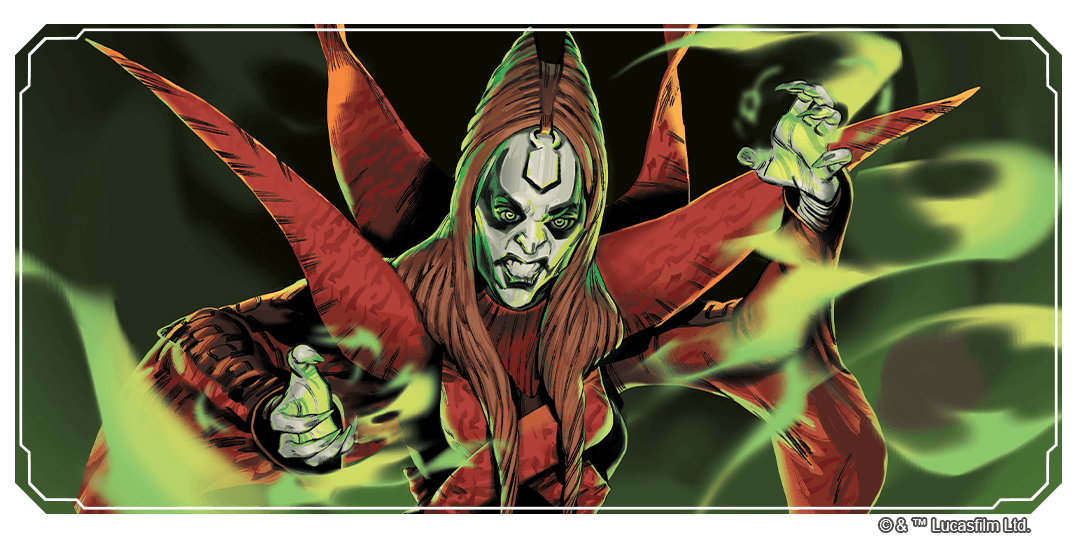
While we have some flexibility in which characters can go with any given card’s mechanics, we actually spend a lot of time in the beginning of a set’s design process figuring out which characters we want to include in it. Each set only has room for a limited number of characters, but by limiting our focus, we can use our character selections to help communicate the set’s theme. We did this in Legends of the Force when we ensured that every leader (and the majority of the units) all had the Force trait. While it ended up being necessary to make the Force token mechanic of the set work, the set’s leaders were selected long before we knew what the specifics of the set’s mechanic would be. By selecting characters that had a clear connection with the set’s theme (the Force), we ensured that every booster pack would have the set’s thematic identity front and center.
So, who gets to be a leader? It’s a complicated question, and a lot of factors go into it. At the end, our goal is for someone to be able to look at the leaders of the set and have a pretty good sense of what the theme of that set is, as well as to see several leaders they recognize and (hopefully) a few they don’t. We want everyone to be able to find someone among the leader roster that they’re excited to build a deck for, and given how diverse the Star Wars audience is, that means having as much variety within the set’s theme as possible.
Some of the considerations are mechanical, including:
- We need 9 heroes and 9 villains
- Among each of those sets of characters, we need 2 (per side) to make sense with each aspect, so we have 1 Common and 1 Rare leader of each main aspect
- Ideally, our leaders make sense having a variety of deploy costs
And some of those considerations are thematic, including:
- We want to ensure that there are enough characters in each leader list that the most casual fans of Star Wars will recognize
- We want to ensure that there is a diversity of characters—in their skill set, in their demographics, and in their source material
- We want to ensure we include characters who would have a difficult time appearing in other sets
- We want to ensure that the “main characters” of Star Wars appear with enough regularity that they don’t fall out of the Premier rotation
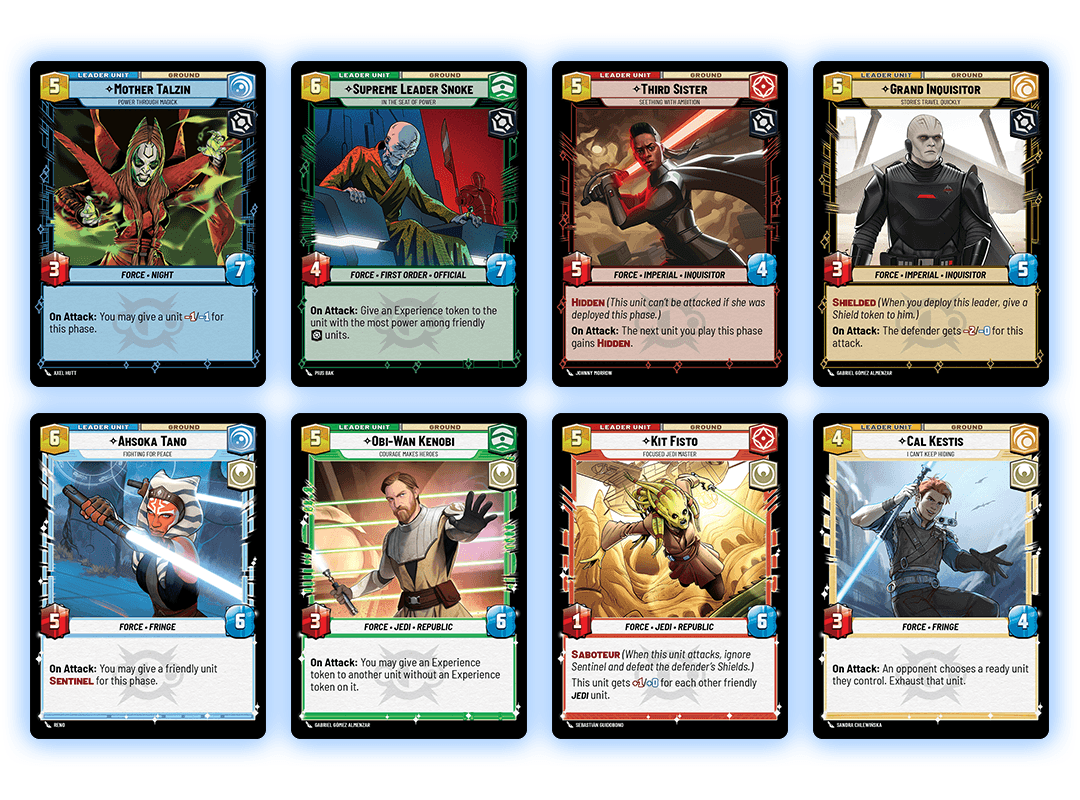
Usually, the first leaders we select for a set are the Spotlight Deck leaders. After all, they’re the only characters guaranteed to appear on the packaging, so we want to ensure that those characters both clearly represent the set’s themes and also are recognizable and beloved enough by casual Star Wars fans that they would be interested in buying the deck. For example, the Spotlight Deck leaders for Legends of the Force (Qui-Gon Jinn and Darth Maul) are two character that almost any Star Wars fan will recognize. As excited as I was to put Barriss Offee into Legends of the Force as a villain leader, she would make for a bad choice to headline a Spotlight Deck. She’s a character who’s never appeared in a film, and the villainous version of her especially only appears in a couple episodes of the Clone Wars series, so if she were to appear on the cover of a Spotlight Deck, most people would react either with indifference (“I don’t know who that character is”) or with confusion (“I don’t recognize this version of the character”), and in either case would not be inclined to buy the deck. Qui-Gon and Darth Maul simply have more star power than Barriss does, so they get to be the faces of the Spotlight Decks.
Once the Spotlight Deck leaders are decided, we brainstorm a list of characters who we think would make the most sense to include. Within this list, we spend a lot of time considering the recognition and popularity of the characters we’re discussing. After all, we want players to be excited about the leaders they open in booster packs, which means we need our leaders to be characters that players will recognize. This includes players of every level of fandom, from the most casual Star Wars fan who enjoyed the original trilogy in the ‘70s/‘80s to the modern day fan who was inspired by the sequels to the diehard follower who has seen all the shows and read all the books. Therefore, it’s important to ensure that some of our leaders are characters that almost anyone will recognize (such as Obi-Wan Kenobi or Kylo Ren), and that we don’t have too many characters that only appear in the background or in external media (such as Kit Fisto or Darth Revan). With limited space in any given set to include the more esoteric characters from the franchise, we prioritize characters who would have a very difficult time making sense in any other set. Darth Revan is a perfect example of this; he fits the themes of Legends of the Force perfectly, but it would be difficult for him to make sense in a set about space battles or political intrigue (to use the adjacent sets as examples). Therefore, Revan was chosen to be in Legends of the Force rather than another character who could have made sense in this set but who could also more easily appear in other sets, such as Baylan Skoll.
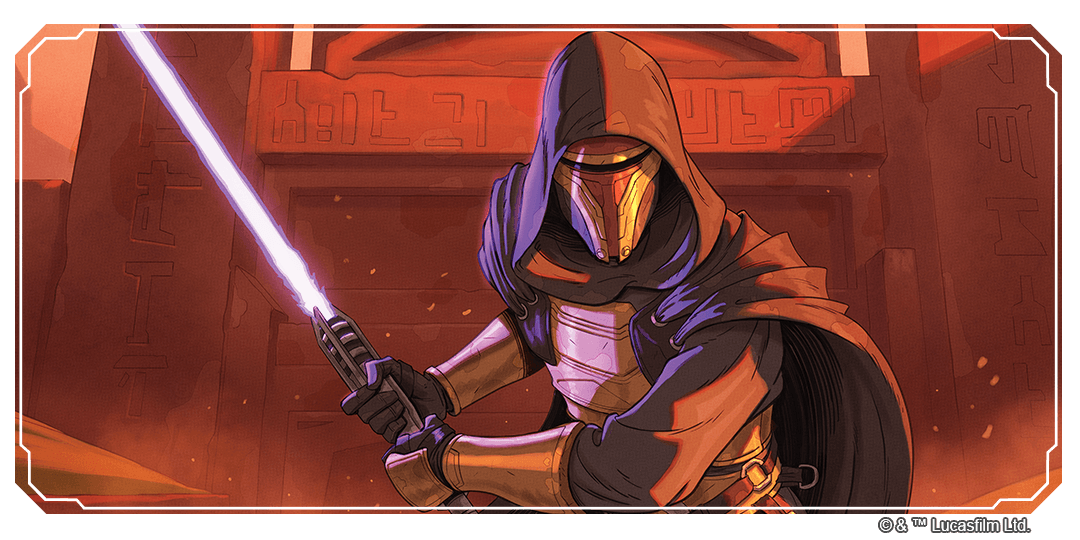
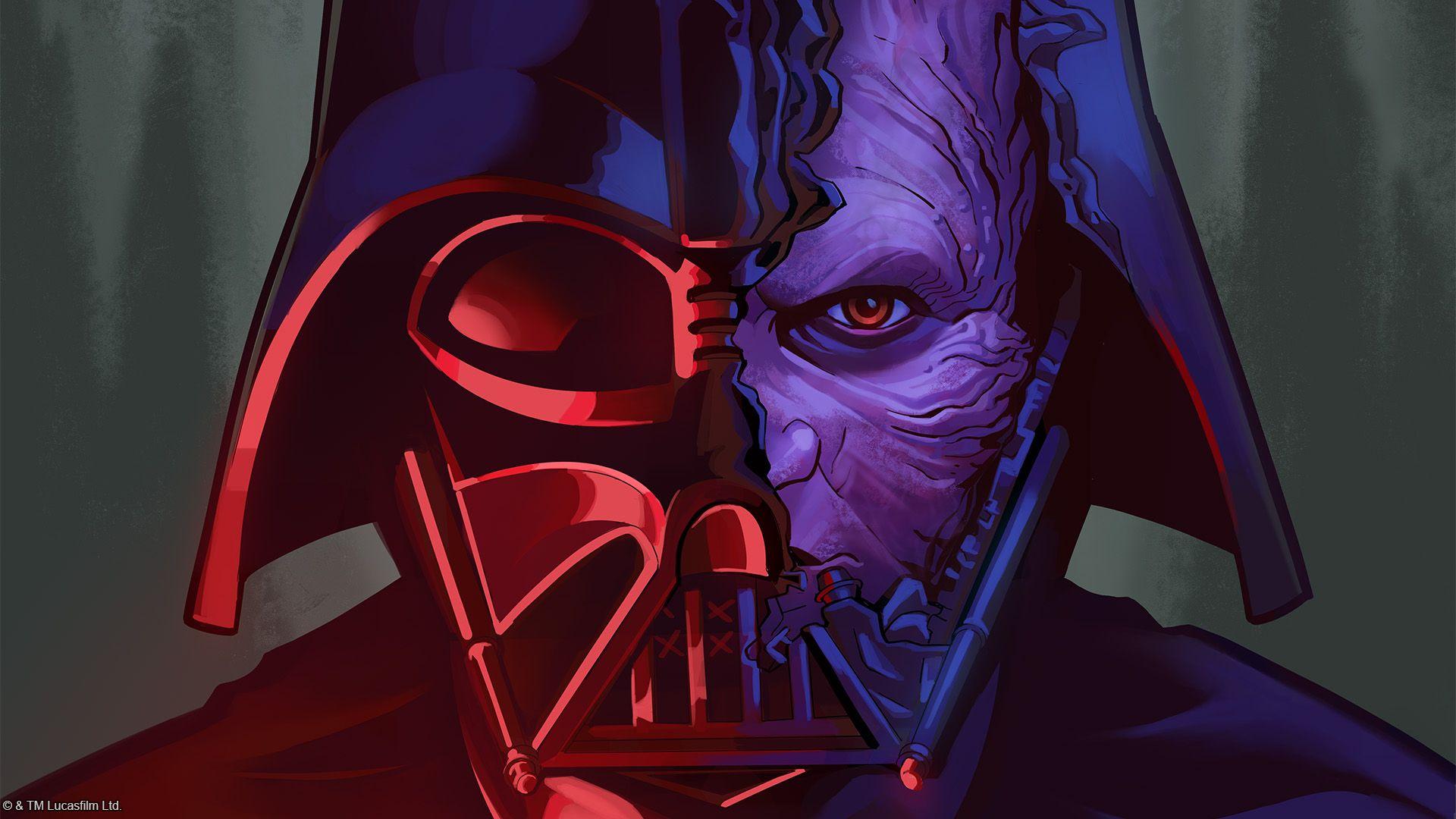
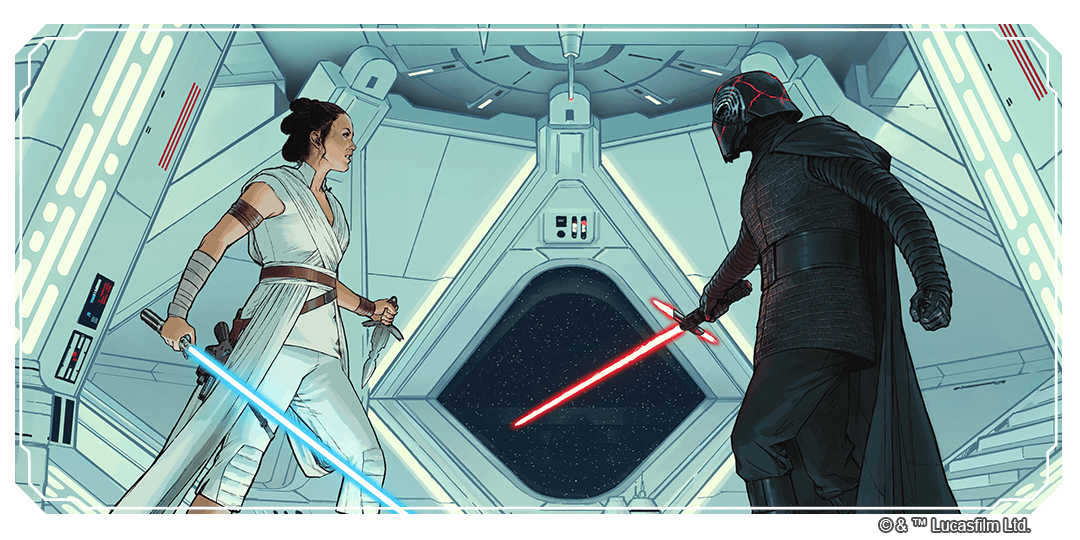
Our initial brainstorm inevitably identifies characters who are so appropriate for the set’s theme that it would be difficult to imagine the set without them. For Legends of the Force, this includes characters like Rey, Kylo Ren, Obi-Wan Kenobi, and the Grand Inquisitor, but it also includes characters like Luke Skywalker, Darth Vader, Palpatine, and Yoda. How could we call this a Force-themed set but not include those characters as leaders? In these cases, we do discuss whether the character is iconic enough to the set’s theme that we should duplicate leaders with nearby sets, and what we can do to differentiate them if we do. Usually, however, we can find compromises such that the leader list still feels complete. This is why Anakin Skywalker is such an important inclusion in Legends of the Force, for example; he is close enough to both Luke and Vader in terms of recognizability and fan acclaim that he can stand in for them, especially since both of those characters just appeared in Jump to Lightspeed and we wouldn’t want to make new leader cards for them quite so soon.
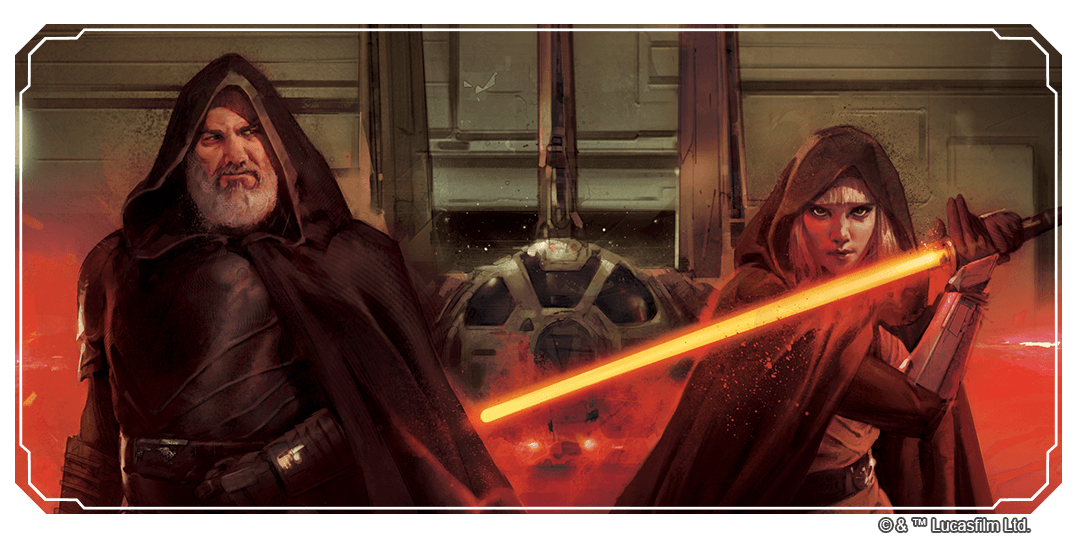
The list of characters that we want to include in a set then gets filtered through the set’s mechanical needs: which leaders would make sense in which aspects, and which versions of those characters does that lead us towards? A Vigilance version of Obi-Wan Kenobi highlights a very different part of his character than a Command or a Cunning version does, so we want to lock in early which leaders are going to appear in which aspects. We prioritize characters going into the aspects that make the most sense for them, such as Darth Maul being Aggression and Avar Kriss being Command, and let the more flexible characters fill in where we need them most. Sometimes, this results in a hole in the lineup that we weren’t expecting, such as when we discovered that we didn’t have enough characters that made sense in Cunning-Villain, and came to a villainous version of Barriss Offee as the solution.
Filling Out the Skeleton
The leaders may be the face of a set, but the unique units make up the bulk of the characters who receive cards. Despite this difference in volume, however, a lot of the decision-making considerations between who gets to be a leader and who gets to be a unit are the same. Rather than 18 slots in any given set, there are closer to 75 unique units—almost all of the Rare, Legendary, and Special-rarity units are unique, and most of the Uncommons are as well—so the inclusion list gets to be much longer. But the same set of priorities that applies to the leaders applies to units as well: we still want characters people will recognize and be excited by, we still want a diversity of characters, and we still want to make sure that the characters selected mostly adhere to the set’s theme.
Unlike the list of leaders that gets locked in at the beginning of design, however, the list of unique units in a set often remains malleable throughout the early design period. The designers create a list of characters that is inclusive of everyone they might want in the set, and as they design cards to fill out the set, they assign characters from the list to those cards. Importantly, every set has a certain intended allotment of “non-theme” characters—ones who we want in the set even though they have nothing to do with the set’s identity. This could be because that character hasn’t gotten a card in a long enough timeframe (if ever), or because a mechanical card design fits that character so perfectly that we can’t imagine it be anyone else, or because the character is intended to support an adjacent set’s themes, so that players who have decks built for previous sets have characters to look forward to in the new set.
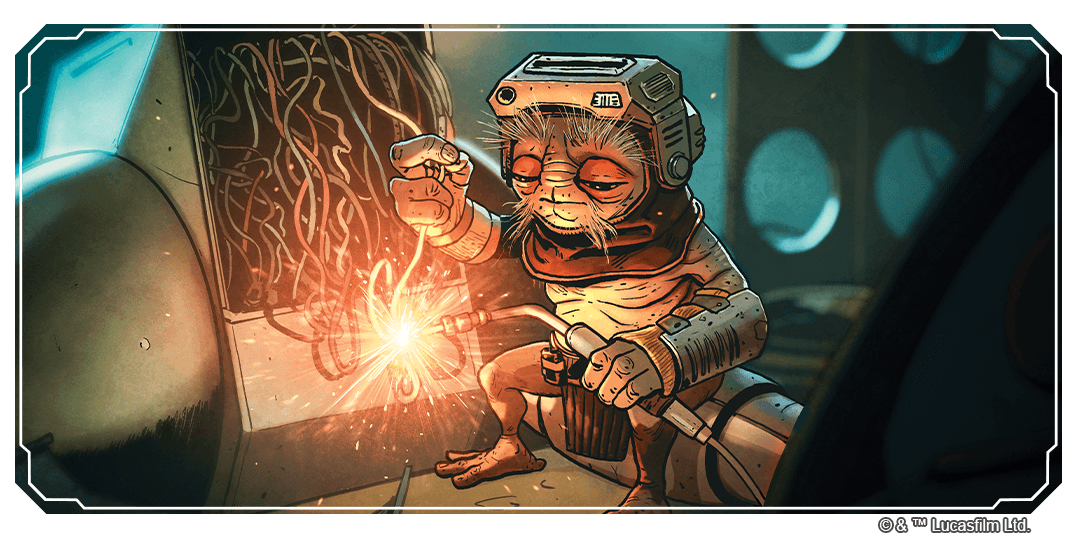
As with the leaders, our use of “expanded universe” material is intentionally restrained. We’re making a game that we want to cater to all Star Wars fans, so we want to ensure that everyone has something to recognize and be excited by. This means that characters that more people have seen get featured more often: characters from the films are the most likely to appear in any set, with the live action shows coming next, then the animated shows. Characters from video games are only recognizable to fans who play video games, characters from comics and novels are only recognizable to fans who have engaged with those media, and characters from Legends continuity are only recognizable to players who were Star Wars fans in the ‘90s and ‘00s. Therefore, while we take great excitement to include characters from those expanded material in our sets (as game designers, we’re fans of those materials ourselves), they’re intentionally done sparingly. The films and shows make up the substance of what appears in Star Wars: Unlimited, and the expanded universe gets to be the exciting spice that we include for the fans who have a favorite corner of the franchise that’s off the beaten path.
Once art is ordered for a set, it becomes noticeably more difficult to change the character lineup. Conveniently, this occurs after the set has finished being designed and when it goes into its extensive playtesting process. Most card designs change, often extensively, during this process. Sometimes this means that characters move around the set dramatically; a neutral Cunning unit might end up as Vigilance-Villainy, or a character that was originally concepted as an 8-cost finisher ends up as a 3-cost setup card. However, keeping in mind the identities of the characters in the set, changes to any given card can be done so that the card continues to feel like an accurate interpretation of that character. In the end, the players will only see the final product, so as long as the final product feels holistically satisfying, then it doesn’t matter how we get there.
Everyone Has a Favorite
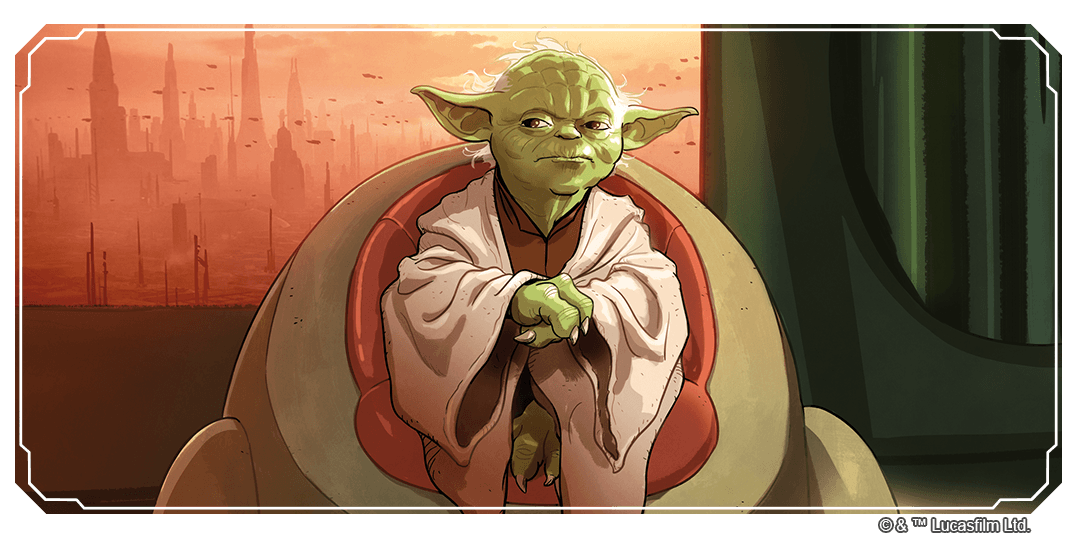
At the end of the day, we can’t (and won’t) get everyone’s favorite character into any given set. That’s why we have a variety of sets, and also why we make so many of our units unique! The real goal is to ensure that when someone opens a booster pack, they have a good chance of finding a character that will inspire and excite them. But something that I’ve noticed happen repeatedly—and something that I always aspire towards when guiding the set designers through the character selection process—is the experience of a player discovering a new character or corner of the Star Wars franchise that they didn’t already know about but quickly grow to love. We use characters that fans already know to get them into each new gameplay experience, and my hope is that the variety that we inject into each set means that they are regularly seeing something new, like a character that they didn’t know was in Star Wars but one whose appearance or game mechanics interest them enough to go look that character up. And maybe, just maybe, they’ll find something new to get excited about in this franchise that we all love so much.
May you feel inspired to try something new.
Share This Post