Eine neue Saison beginnt
17. Juni 2026 | Verfasst von Peter Schumacher
Als Trading Card Game entwickelt sich Star Wars™: Unlimited ständig weiter. Dies gilt sowohl für das Spiel selbst als auch für das Organized Play. Als das Spiel auf den Markt kam, nannten wir das erste Jahr des OP „Saison Null“ – eine Art „Testphase“, die dabei helfen sollte, die Zukunft der Turnierszene zu gestalten. Die Galactic Championship im letzten Jahr markierte den Beginn von „Saison Eins“, in der das Organized-Play-Programm in vollem Umfang lief. Nun, da eine neue Galactic Championship vor der Tür steht, neigt sich Saison Eins dem Ende zu, was bedeutet, dass es Zeit ist, einen Blick auf das zu werfen, was als Nächstes kommt.
Es gibt heute viel zu berichten, also lasst uns ohne weitere Umschweife einen Blick auf die zweite Saison des Organized Play werfen!
Änderungen bei der Qualifikation für Constructed-Formate
Ob es sich nun um einen einfachen Store Showdown oder eine groß angelegte Regional Championship handelt – die meisten Star Wars: Unlimited-Constructed-Turniere (Premier oder Eternal) beginnen mit Schweizer Runden und enden mit einem Top-Cut. Während sich daran in der zweiten Saison nichts ändert, wird eine kleine, aber wichtige Anpassung daran vorgenommen, wie man sich für die nächste Runde qualifiziert.
Zu Beginn der Saison Null haben wir als Reaktion auf das Feedback der Spieler ein System eingeführt, bei dem sich die Top 64 für Tag 2 qualifizieren, und zwar für unsere größeren Turniere. Im Grunde galt: Wenn dein Turnierrang nach einer ausreichenden Anzahl von Schweizer Runden bei oder über einem bestimmten Schwellenwert lag, qualifiziertest du dich für die nächste Phase des Turniers, während alle anderen ausgeschieden waren. Das funktionierte eine Zeit lang recht gut, aber viele Spieler fragten sich, welche spezifische Turnierbilanz sie benötigen würden, um es bis zu Tag 2 zu schaffen (wie viele Siege brauchten sie, wie viele Niederlagen konnten sie sich leisten usw.), und so wechselten wir zu Beginn der ersten Saison für unsere Events zu einem „X-2-Modell“.
Natürlich brachte das X-2-Modell auch seine eigenen Herausforderungen mit sich. Da die Anzahl der Teilnehmer an jedem Event variiert, führte dieses Modell manchmal dazu, dass weniger Spieler in die nächste Turnierrunde kamen, als wir uns gewünscht hätten. Aus diesem Grund werden wir in der zweiten Saison die beiden bisherigen Modelle zusammenführen, um die Vorteile beider zu nutzen.
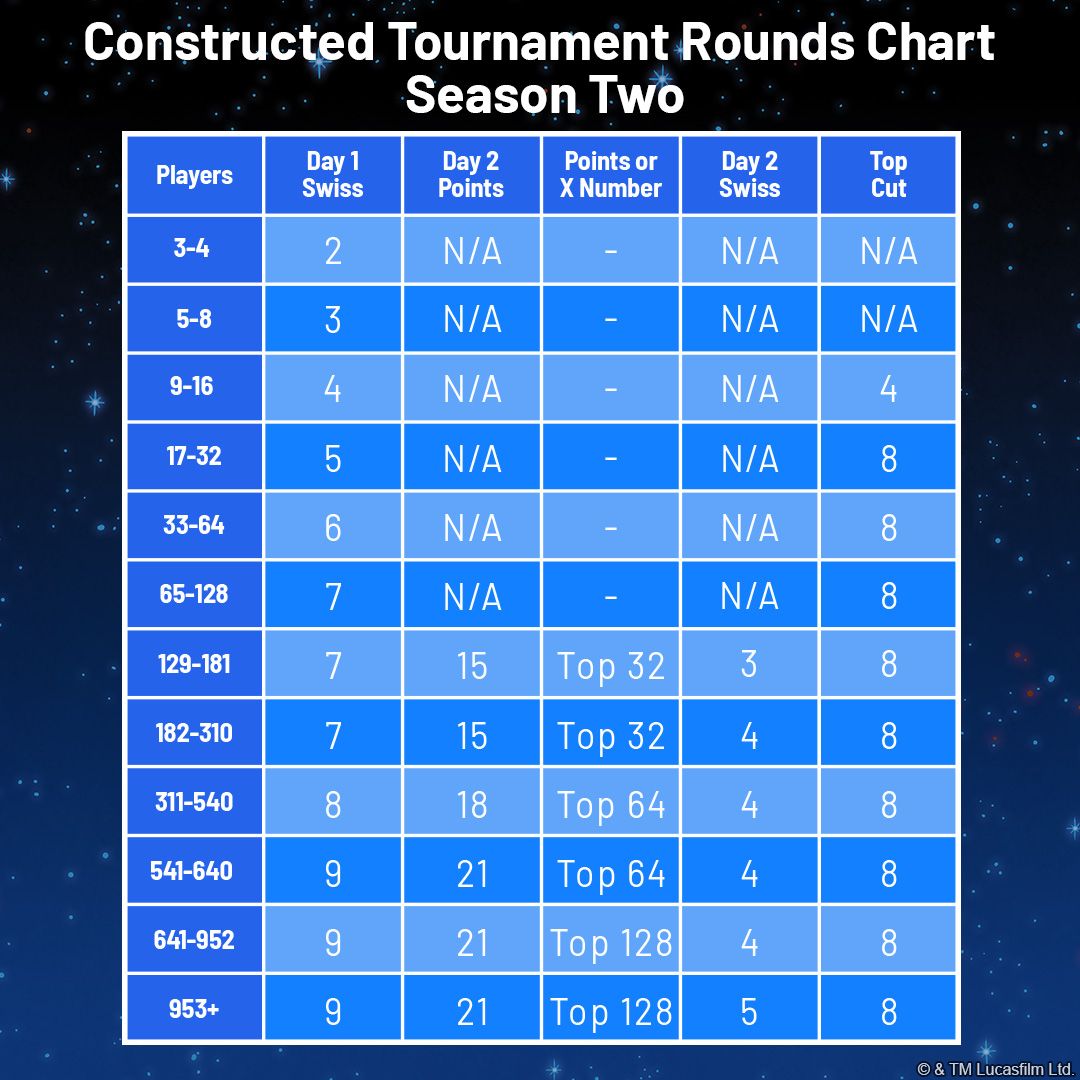
Mit diesem neuen Modell strebst du weiterhin eine Turnierbilanz von X-2 an, um dir einen Platz in der nächsten Runde zu sichern. Je nach Teilnehmerzahl haben jedoch auch Spieler, die diese Marke nicht ganz erreichen, möglicherweise noch eine Chance, weiterzukommen. Denn bei unseren größeren zweitägigen Turnieren führen wir zusätzlich ein „Top-X“-Mindestkriterium ein, das je nach Spielerzahl variiert. Bei jedem Turnier wird die Methode angewendet, die zu einer größeren Anzahl von weiterkommenden Spielern führt – sei es nur die Spieler, die mindestens X-2 erreichen, oder alle innerhalb der Top X der Rangliste.
Nehmen wir zum Beispiel an, wir haben ein Turnier mit 130 Spielern. Gemäß der obigen Tabelle würde dies zu sieben Runden nach dem Schweizer System am ersten Tag des Turniers führen, wobei das „Top X“-Minimum die Top 32 wäre. Da sich 130 Spieler nicht sauber auf sieben Runden aufteilen lassen, wird es am Ende des Tages letztlich weniger als 32 Spieler mit einer Bilanz von mindestens X-2 (oder 15 Turnierpunkten) geben. Daher kommen stattdessen alle Spieler weiter, die unter den Top 32 rangieren, darunter alle mit einer Bilanz von X-2 oder besser sowie einige wenige mit X-3.
Betrachten wir ein weiteres Beispiel: Nehmen wir diesmal an, wir haben 256 Spieler. Nach sieben Runden im Schweizer System werden etwa 58 Spieler eine Turnierbilanz von X-2 oder besser haben. Da dies über dem Minimum von 32 Spielern für diese Teilnehmerzahl liegt, kommen alle 58 dieser Spieler in Tag 2.
Mit diesem System nutzen wir die Stärken beider Systeme, die wir bisher für Star Wars: Unlimited OP verwendet haben. Für euch Spieler bedeutet das, dass ihr noch mehr Möglichkeiten habt, euch bei unseren größeren Turnieren für Tag 2 zu qualifizieren – und damit mehr Chancen, eure Wettkampfkünste unter Beweis zu stellen!
Änderungen an der Turnierstruktur für Limited-Formate
Wir haben nicht nur die Constructed-Formate für die zweite Saison aktualisiert, sondern auch die Turnierstruktur für unsere Limited-Formate (Draft und Sealed) angepasst.
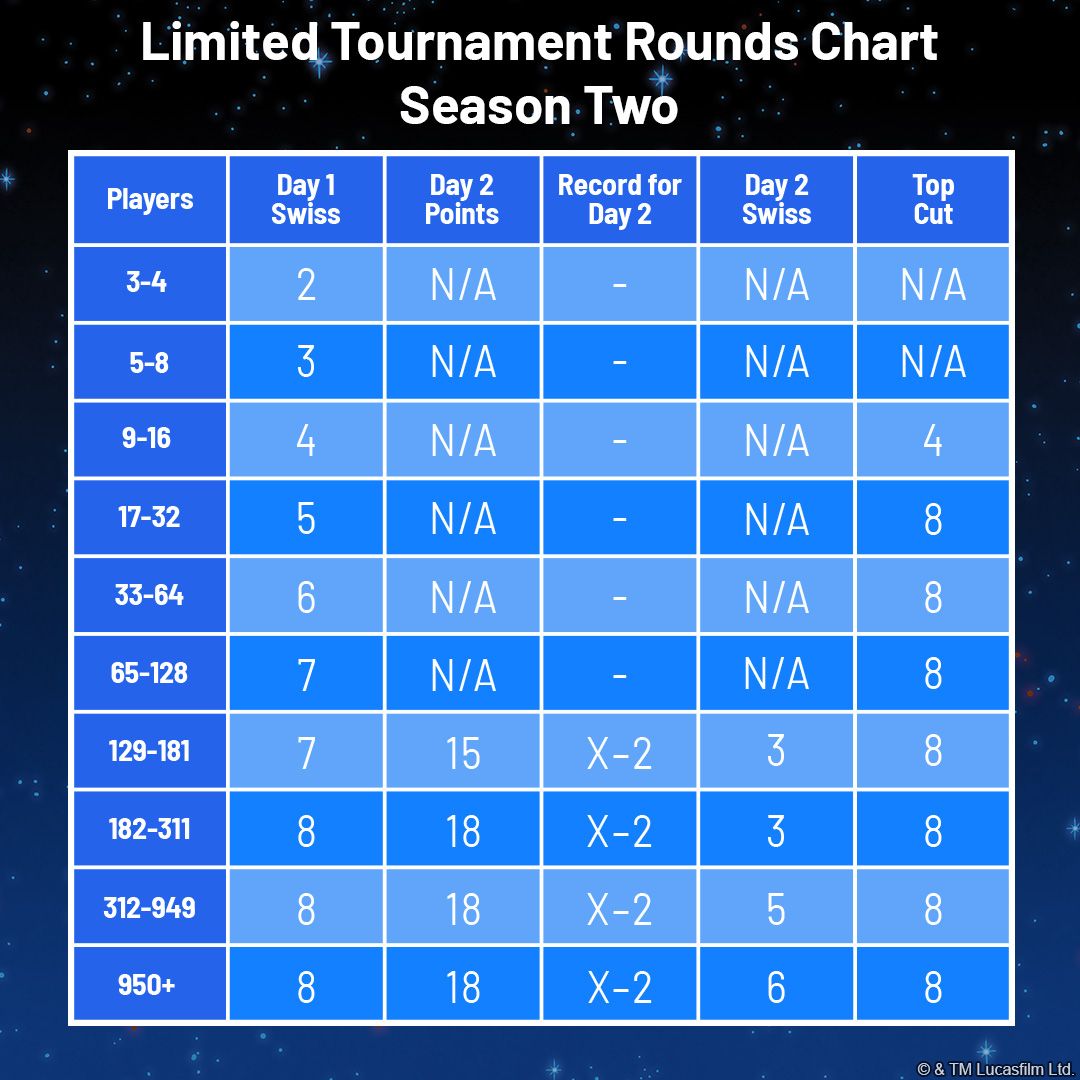
Wie ihr in der obigen Tabelle sehen könnt, beträgt die maximale Anzahl an Schweizer Runden am ersten Tag eines Turniers im Limited-Format in der zweiten Saison nun acht. Das bedeutet, dass Tag 2 von Limited-Turnieren nun aufgrund der verbleibenden Schweizer Runden und der Top-Cut-Phase wahrscheinlich der längere Tag des Turniers sein wird. Aus diesem Grund wird ein Limited-Event letztendlich weniger Sealed-Runden und mehr Draft-Runden umfassen als bisher üblich. Bei der Planung von Tag 2 eines Events werden, sofern genügend Spieler vorhanden sind, um eine zweite Draft-Phase auszulösen, nach dieser Phase mindestens zwei Schweizer Runden gespielt, um eine ausreichende Nutzung des Draft-Decks jedes Spielers sicherzustellen.
Dank dieser Änderungen habt ihr noch mehr Gelegenheiten, eure Draft-Fähigkeiten bei unseren Limited-Events unter Beweis zu stellen. Mit längeren Tagen 2, ausreichend Zeit zum Ausprobieren von Decks und dem gewohnt hochkarätigen Top-Cut können wir es kaum erwarten zu sehen, was ihr bei unseren Limited-Format-Events zusammenstellt!
Anpassungen bei Anzahl und Formaten der Events
Genau wie im letzten Jahr bietet uns der Übergang zwischen den Organized-Play-Saisons die Gelegenheit, Anpassungen daran vorzunehmen, wie viele Events der Competitive-Stufe in jedem Set* stattfinden. Wir haben Anpassungen an allen drei Arten von Competitive-Events vorgenommen und sogar eine vierte hinzugefügt, auf die wir im nächsten Abschnitt eingehen werden.
*Hinweis: Für die Zwecke dieses und des folgenden Abschnitts beziehen wir uns mit dem Begriff „Set“ auf eines der drei Hauptsets des Jahres. Das bedeutet, dass es für das Miniset Icons keine eigenen Veranstaltungen in der zweiten Saison geben wird.
Bei den Planetary Qualifiers steigt die Anzahl der Events pro Set von etwa 203 auf mindestens 215. Diese zusätzlichen Events bieten Spielern auf der ganzen Welt mehr Möglichkeiten, in die erste Stufe der Competitive-Events einzusteigen, ohne dafür weit reisen zu müssen. Zudem können die Veranstalter der einzelnen Planetary Qualifiers wählen, welches Spielformat sie für ihr Event verwenden möchten: Premier, Limited (bis zu 25 % der Events) oder Eternal (bis zu 20 % der Events).
Die Sector Qualifiers sind die am wenigsten veränderten unserer Competitive-Events. Ihre Anzahl wurde lediglich von drei pro Set auf vier pro Set erhöht. Dies ist auf die Änderungen an den Regional Championships zurückzuführen, über die ihr gleich mehr erfahren werdet. Genau wie in Saison Eins bleiben Sector Qualifiers zweitägige Events mit jeder Menge toller Preise.
Auf der anderen Seite wurden die meisten Änderungen an den Regional Championships vorgenommen. Im Gegensatz zu den beiden anderen bestehenden Event-Typen ist die Anzahl der Regional Championships sogar zurückgegangen. Anstelle einer Regional Championship pro Set gibt es nun nur noch eine einzige Regional Championship für die gesamte Saison. Diese Regional Championship wird in Europa stattfinden und einem „entgegengesetzten Zeitplan“ zur Galactic Championship folgen. Das bedeutet: Wenn die Galactic Championship im Sommer stattfindet, findet die Regional Championship der Saison im vorangegangenen Winter statt.
Auch wenn die Anzahl der Regional Championships zurückgegangen ist, hat sich ihr Umfang keineswegs verringert. Sie bleiben unsere größten OP-Events außerhalb der Galactic Championship, erstrecken sich über mehrere Tage und umfassen zwei gleichzeitig stattfindende Turniere: eines im Premier-Format und eines in den Limited-Formaten. Auch die Preise und das Prestige, das mit dem Gewinn eines der beiden Turniere einhergeht, sind größer und besser denn je, was dieses Event zu einem absoluten Muss für jeden Spitzenspieler macht!
Neuer Event-Typ: Offene Events
Wie bereits erwähnt wird in Saison Zwei eine neue Art von Star Wars: Unlimited-Event auf Competitive-Ebene eingeführt: die offenen Events! Diese besonderen Events finden während der gesamten Saison parallel zu den Sector Qualifiers, der Regional Championship, der Galactic Championship und bestimmten Events auf Convention-Ebene statt. Je nachdem, zu welcher Art von Veranstaltung sie gehören, kann sich der genaue Name des offenen Events ändern, zum Beispiel „Sector Open“ oder „Galactic Open“.
Diese Competitive-Turniere für Einsteiger können als „Super-Neben-Events“ bei diesen größeren Events betrachtet werden und vergeben sogar eigene Qualifikationspunkte. Jedes offene Event bietet je nach Format Platz für etwa 64 bis 128 Spieler und wird oft in einem anderen Format ausgetragen als das begleitende „Haupt-Event“. Wenn beispielsweise ein Sector Qualifier das Premier-Format verwendet, würde das dazugehörige Sector Open entweder Eternal oder Limited verwenden.
Mit der Einführung der offenen Events gibt es für euch noch mehr Möglichkeiten, während einer Organized-Play-Saison Qualifikationspunkte zu sammeln. Und wo wir gerade von Qualifikationspunkten sprechen …

Anpassungen bei den Qualifikationspunkten
Wir haben außerdem Anpassungen an den Qualifikationspunkten (QP) für die zweite Saison des Star Wars: Unlimited Organized Play vorgenommen. Wir haben QP in der ersten Saison eingeführt, um den Spielern eine zusätzliche Möglichkeit zu bieten, sich für die Galactic Championship zu qualifizieren. Dieses System bleibt bestehen, aber wir haben einige Änderungen an der Anzahl der Punkte, die ihr verdienen könnt, und dem Zeitpunkt, zu dem ihr sie verdienen könnt, vorgenommen.
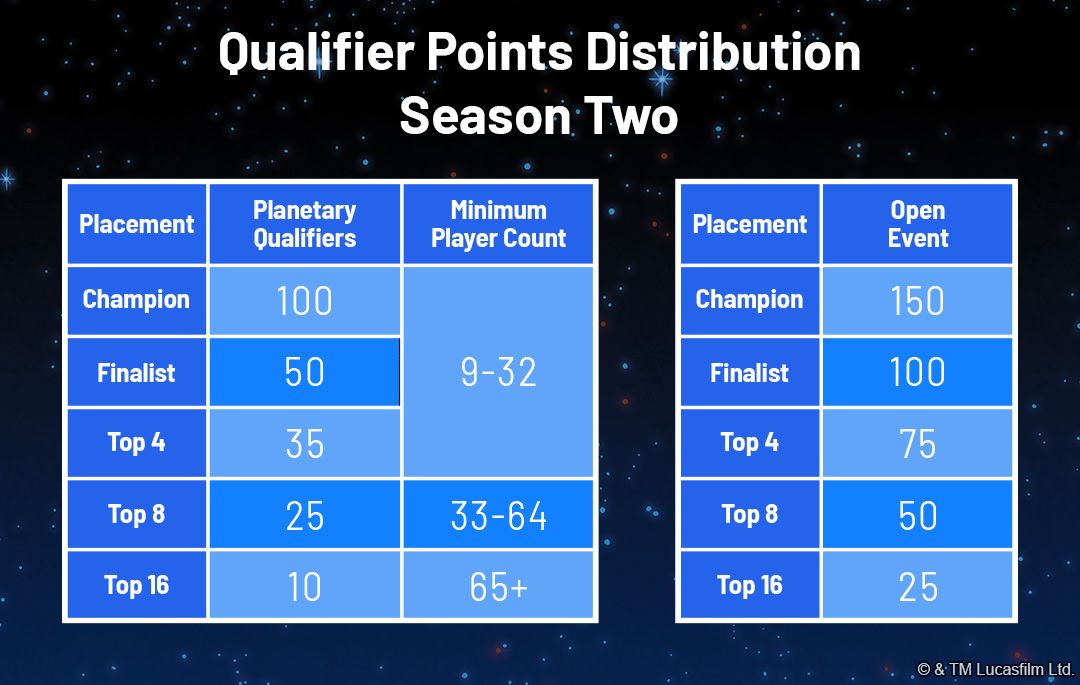
Zuallererst richtet sich die Anzahl der bei einem Planetary Qualifier vergebenen Qualifikationspunkte nun nach der Anzahl der Spieler bei diesem Event. Bei allen Planetary Qualifiers erhalten die Top 4 garantiert QP, unabhängig von der Teilnehmerzahl. Wenn mindestens 33 Spieler am Planetary Qualifier teilnehmen, erhalten auch die Top 8 Punkte. Und schließlich erhalten bei mindestens 65 Teilnehmern auch die Top 16 QP.
Eine weitere wichtige Änderung bei der Vergabe von Qualifikationspunkten ist, dass es nun eine Saisonobergrenze von 500 QP für Planetary-Qualifier-Events gibt. Das bedeutet, dass ihr während der gesamten Saison nicht mehr als 500 QP bei Planetary-Qualifiers verdienen könnt, selbst wenn ihr weiterhin an ihnen teilnehmt. Die QP, die ihr bei anderen Events sammelt, zählen nicht zu dieser Obergrenze; sie gilt ausschließlich für Planetary-Events. Wenn ihr in den QP-Ranglisten aufsteigen wollt, müsst ihr weiterhin bei anderen Competitive-Events Punkte sammeln!
Apropos QP-Rangliste: Den 32 besten Spielern weltweit, die im Laufe der Saison die meisten QP gesammelt haben, werden ein bezahlter Flug und ein Hotelzimmer für die Galactic Championship 2027 angeboten! Diese Spieler erhalten außerdem eine exklusive Spielmatte als Zeichen ihrer Leistung. Freut euch darauf, in Zukunft mehr darüber zu erfahren!
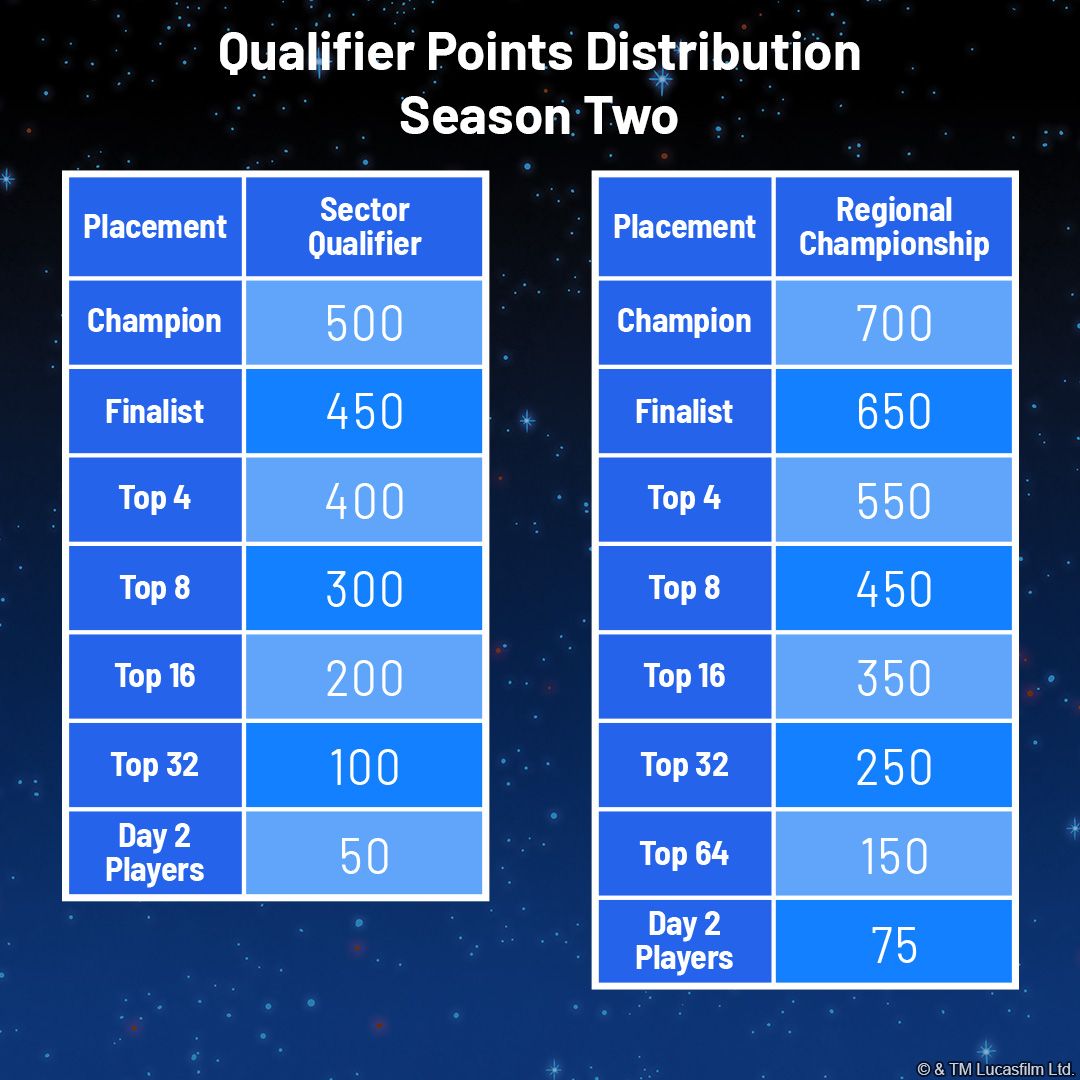
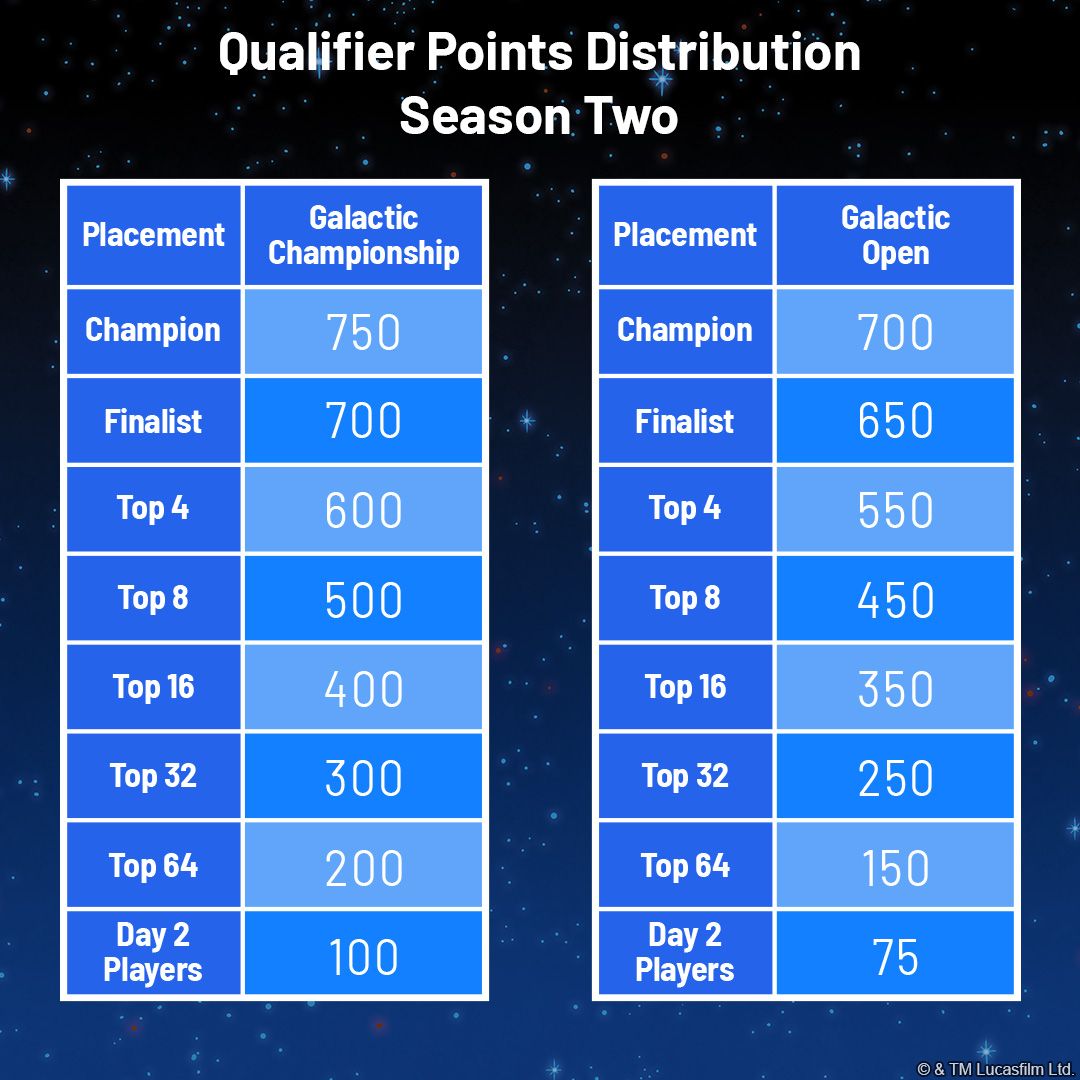
Schließlich haben wir auch aktualisiert, wie viele Qualifikationspunkte ihr in jeder Event-Stufe sammeln könnt. Die vollständige Aufschlüsselung der nach Event-Typ vergebenen Punkte findet ihr in der folgenden Grafik:
Genau wie in der ersten Saison ist es dein Ziel, im Laufe der Saison 100 QP zu erreichen, um dir eine Einladung zu Tag 1 der Galactic Championship zu sichern. Nimm weiterhin an Events teil und gib dein Bestes, dann wirst du dein Ticket für die Galactic Championship im Handumdrehen in der Tasche haben!
Damit kennst du nun alle wichtigen Änderungen, die in der zweiten Saison des Star Wars: Unlimited Organized Play anstehen. Es kann im Laufe der Zeit noch weitere Aktualisierungen geben, wie zum Beispiel Anpassungen bei den Preisen unserer größeren Events, aber darüber werden wir zu einem späteren Zeitpunkt gesondert berichten. Freut euch auf die zweite Saison des Organized Play, die am Ende der Galactic Championship im Juli startet!
Teile Diesen Beitrag