Welcome to Ashes
July 15, 2026 | Written by Aaron Miles, Jorge Zhang, and Danny Schaefer
The second Star Wars™: Unlimited Galactic Championship is only a few weeks away, and Ashes of the Empire has been fully revealed. There's a lot of change coming to the metagame, with multiple powerful new cards and abilities. This article aims to point you in the direction of some of the most serious game-changers, as well as help you prepare for the ultimate level of competition!
A Lawless Time's Metagame
To start, let's take a look at where the competitive Premier metagame currently sits. Looking at successful decks from Planetary Qualifiers, as well as what decks players registered for our Sector and Regional Qualifiers, there are three main pillars of the format: Lando Calrissian (A Lawless Time, 18), Boba Fett (Jump to Lightspeed, 9), and Obi-Wan Kenobi (Legends of the Force, 8). The Boba deck emerged early in the format, setting itself as the deck to beat and defining the early part of the metagame that later allowed the Obi-Wan and Lando decks to emerge. Boba's ability to push damage quickly—while having strong enough cards in only Aggression and Villainy—allowed him to pair with the Lake Country (Jump to Lightspeed, 31) base. This gave the format at large a simple mission: if you wanted to race to victory, you had to beat Boba's constant indirect damage while also being able to chew through 34 base HP. The metagame answered with Obi-Wan Kenobi and a fairly straightforward midrange Force deck. This deck utilized Experience tokens to make sturdier units that could better survive Boba's indirect damage and Topple the Summit (Secrets of Power, 183), while also using cards like Yaddle (Legends of the Force, 45) and Itinerant Warrior (Legends of the Force, 48) to maintain healthy base HP.
At the Sector Qualifier in Atlanta, Obi-Wan's presence very slightly overtook Boba Fett's, with the two decks taking up roughly equal share of their combined 30% of the 400+ player field. But it was a new deck that took the tournament by storm and established itself as the third pillar of the meta, with Lando Calrissian paired with Lake Country taking three spots in Top 8 and ultimately winning the whole event. Lando operated on a similar axis as Boba Fett, using The Master Codebreaker (A Lawless Time, 229) and a small package of Gambit cards to generate early leads, then use Lando's ability to also bring out some of the best late-game units the format has to offer, such as Qui-Gon Jinn (Legends of the Force, 200) and Liberty (A Lawless Time, 224). Like Boba Fett, Lando played in a largely aggressive lane, utilizing events to handle enemy units and pushing as much damage as possible. Players of this deck leveraged Lake Country's high HP to win races, even playing off-aspect Aggressive Negotiations (Secrets of Power, 179) to make sure that they could always seal the deal.
While those 3 proved themselves as the decks to beat in A Lawless Time, plenty of other decks and ideas also proved extremely capable of doing so. Once the overall meta became established, Dedra Meero (Secrets of Power, 10) and Aurra Sing (A Lawless Time, 4) decks became the forefront of the more controlling strategies. Outside of those two decks, most of the format had an aggressive slant, with Aggressive Negotiations appearing as the most played card by a wide margin. Colonel Yularen (Secrets of Power, 6) and Chewbacca (A Lawless Time, 13) decks led the field in fast-paced strategies in the ground arena, while Darth Vader (Jump to Lightspeed, 6) decks led the space race, taking down the London Sector Qualifier.
Ashes of the Empire
In the first year of Star Wars: Unlimited, it was extremely easy to defeat enemy units almost as quickly as they could be played, with all-star events like Power of the Dark Side (Spark of Rebellion, 41) and Takedown (Spark of Rebellion, 77). After the game's first rotation, many premium options to defeat units were no longer available in Premier, and with larger HP-skewed units, A Lawless Time's aggressive metagame was largely driven by inefficient ways to interact with opposing units. Ashes of the Empire doesn't bring us all the way back to pre-rotation levels of removal options, but it does introduce a lot more powerful effects than we've seen since A Lawless Time's release. There's plenty of new ways to interact with your opponents' units, but the standouts to keep an eye on are upgrades to Vigilance-Villainy control decks and faster tempo strategies using Master Codebreaker.
For the Villainy side, Chimaera (Ashes of the Empire, 52) and Pre Vizsla (Ashes of the Empire, 53) serve as the primary new finishers and stabilizing tools for Vigilance, especially when played in back-to-back turns. Chimaera especially stands out as one of the cards to keep at the forefront of your mind; if you aren't able to cleanly end the game on the 7-resource turn, you may want to take some time to defeat some of your opponent's weaker units, just so they need to defeat something more meaningful when using Chimaera's ability. Don't underestimate its healing either, because an unchecked Chimaera can very quickly stabilize a game. You may want to play a Direct Hit (Jump to Lightspeed, 78) not just for aggressive Piloting strategies, but also for slower decks that want to utilize the powerful new Capital Ship units in Ashes of the Empire.
For Pre Vizsla, it's important to keep an eye on the HP of your units, since letting multiple units fall to Pre Vizsla's ability means giving your opponent more Mandalorian tokens. These cards will easily slot into the existing Dedra Meero and Aurra Sing control decks, but you may also find Boba Fett dropping Lake Country for a Vigilance base, or the new Grand Admiral Thrawn (Ashes of the Empire, 4) leader emerging as a fresh contender.
On the Heroism side, Reckless Sacrifice (Ashes of the Empire, 163) and Far Far Away (Ashes of the Empire, 236) add to the Gambit card toolbox, allowing for very inexpensive ways to deal with threatening units, especially if Master Codebreaker is in play. These cards push the envelope of a strategy that largely saw success in Lando Calrissian decks, trading away raw card advantage for a better position on the board alongside existing powerful Gambit cards like The Axe Forgets (A Lawless Time, 246) and Faith in Your Friends (Secrets of Power, 211). The addition of these cards will likely see Master Codebreaker find more decks to thrive in besides Lando, and previously reliable Sentinel units with exactly 5 HP might not be as powerful as they were in the past.
Aggression-Cunning-Heroism has not seen much success in A Lawless Time, but it's an aspect combination to keep an eye on in the future. Ezra Bridger (Ashes of the Empire, 13) and Greef Karga (Ashes of the Empire, 17) can utilize Advantage tokens alongside Master Codebreaker to bring new life to these aggressive, tempo-focused strategies, or we may see players continue to iterate on the Chewbacca decks from A Lawless Time.
As a general rule for Ashes of the Empire, since the new Support mechanic can make ANY unit a possible threat, you may want to slow down a bit and attack units more often than you had to in A Lawless Time. Far Far Away and Chimaera reinforce that heuristic; these are powerful cards, but they are only effective if your opponent is able to keep a few units around. Trading more frequently not only limits their options for these cards and for Support, but they will also get less value from defeating or returning an already damaged unit to your hand.
While much of the A Lawless Time format has had players trading base damage back and forth with little unit-to-unit action, Ashes of the Empire introduces a plethora of new Sentinel units that can drastically alter the speed at which games are ending. In the ground arena, Imperial Armored Commando (Ashes of the Empire, 48) and Paz Vizsla (Ashes of the Empire, 28) are two of the most potent ones to keep an eye out for. The Shielded keyword of Villainy's Imperial Armored Commando makes them even harder to take out in normal combat, while Heroism's Paz Vizsla necessitates combat, or he'll leave behind two Mandalorian tokens when he's defeated. In the space arena, T-6 Shuttle 1974 (Ashes of the Empire, 109) and B-Wing Rearguard (Ashes of the Empire, 78) may not be as impressive as their ground counterparts, but they can serve as great speedbumps to aggressive space strategies, such as those revolving around Pilot cards. These are just a small few of the standout Sentinel units in Ashes of the Empire; there are many more to contend with, so expect your A Lawless Time decks to need a bit more time to close out games.
With new abilities that can directly defeat opposing units—and new Sentinel units to help slow down the game—you may find that your games may be ending with more resources than before. A Lawless Time was one of our fastest metagames in Star Wars: Unlimited, and while many of those dominant strategies will still remain strong in Ashes of the Empire, there are a lot more tools available to players keen on surviving until the late game. The aforementioned Liberty along with Yoda (Legends of the Force, 101), Rey (A Lawless Time, 149), and Devastator (Jump to Lightspeed, 143) were some of the best closers in A Lawless Time, and you should probably expect to see more of them going forward.
Joining their ranks, alongside the previously mentioned Chimaera and Pre Vizsla, are powerful new tools like Ravager (Ashes of the Empire, 102), Ninth Sister (Ashes of the Empire, 148), and Zeb Orrelios (Ashes of the Empire, 161). If a Command-Villainy player can survive until 9 resources, Ravager can completely overtake a game. The popular combination of Aurra Sing and Data Vault (Jump to Lightspeed, 24) is a natural home for Ravager, but you may see leaders such as Admiral Piett (Jump to Lightspeed, 5) or Director Krennic (A Lawless Time, 8) try to use their cost reduction and Credit tokens to get access to Ravager as early as possible. Ninth Sister is strong on her own, but can really shine when paired with disruptive Cunning tools such as Interrogation Droid (A Lawless Time, 75) and Hold For Questioning (A Lawless Time, 217). Zeb Orrelios may not have as many stats for his 7-resource cost, but he can effectively add 6 damage to your opponent's base on the turn he is played, or even more if you've managed to stack up some Advantage tokens already. As games may take a few extra turns compared to A Lawless Time, refreshing your knowledge of each aspect's top-end haymakers is an important step in preparing for the Galactic Championship.
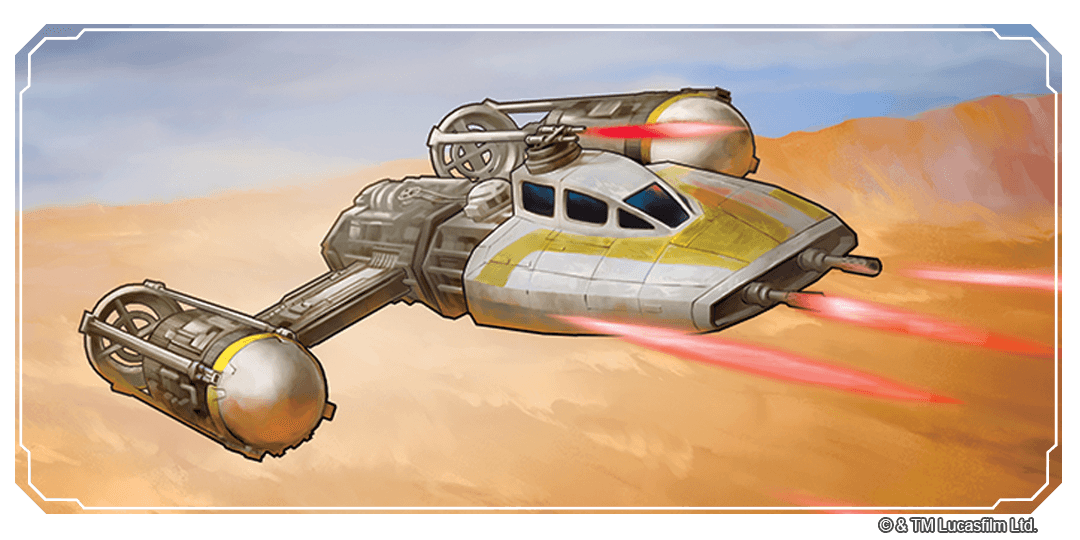
While most of our expectations while developing Ashes of the Empire led us to introduce a lot of tools to help slow things down, we didn't want players who enjoy the more fast-paced strategies to feel left out. Even for ground-based decks, Unsanctioned Patrol (Ashes of the Empire, 222) can be a surprisingly great tool for getting damage through, helping you bypass a Sentinel unit in either arena (or take out pesky Shield tokens) while also getting a solid unit into play. In just the Heroism aspect, Yellow Aces Bomber (Ashes of the Empire, 253) and Neel (Ashes of the Empire, 248) can help speed up a variety of aggressive plans, if you are able to build around them just a little bit to meet their requisite conditions. Yellow Aces Bomber can push a lot of damage in decks utilizing upgrades, including the new Advantage tokens, while Neel looks for units with a low initial power stat that can still pack a big punch, with Han Solo (A Lawless Time, 37) being a personal favorite of ours!
Even though the game's first rotation was only four short months ago, Ashes of the Empire is looking to shake up the meta in a big way. The fast-paced, aggressive metagame of A Lawless Time has made its mark, and while a lot of its most powerful decks will surely stick around, Ashes of the Empire hopes to put power into some underperforming archetypes and give more interactive decks some strength. Hopefully, we've helped point you towards some cards you can expect to see at the Galactic Championship, and we're excited to see what all the competitors will have in store!
If you're still feeling overwhelmed by all the new options, we've got three decks we loved during testing to give you a starting point: Jorge Zhang's Ezra Bridger deck combines the Master Codebreaker toolbox with a suite of new tools in Ashes of the Empire, Ryan Miles' Grand Admiral Thrawn deck represents the more methodical, controlling side what Ashes of the Empire has to offer, and Danny Schaefer's The Mandalorian deck presents a unique playstyle that can attack from multiple angles and take on a diverse metagame.
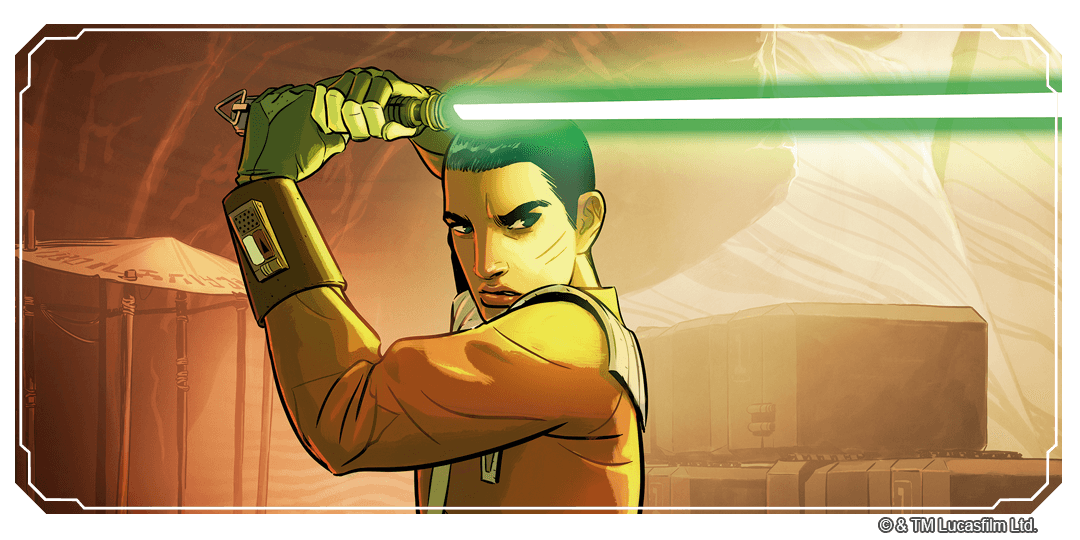
Jorge Zhang's Ezra Bridger Spy Deck
Leader: Ezra Bridger (It's Now Or Never)
Base: Citadel Research Center
Ground Units (26):
3 The Master Codebreaker (High Stakes)
3 Poe Dameron (I'll Come Back For You)
3 Karis Nemik (Freedom Is A Pure Idea)
3 Honorable Nite Owl
3 Lieutenant Gorn (I Deserve Worse)
3 Kelleran Beq (Where Are The Others?)
2 Ahsoka Tano (Chasing Whispers)
3 Rose Tico (Now It's Worth It)
3 Zeb Orrelios (Fists Work Every Time)
Space Units (12):
3 N-1 Starfighter
3 Ebon Hawk (Cause And Effect)
3 Yellow Aces Bomber
3 Unsanctioned Patrol
Events (12):
3 Flash the Vents
3 The Axe Forgets
3 Faith in Your Friends
3 Far Far Away
Hi everybody! I'm Jorge, a developer for Star Wars: Unlimited, and I am here to tell you about “Spy Ezra Bridger,” the deck that I would take to the Galactic Championship if I were a competitor! Ezra Bridger (Ashes of the Empire, 13) is an explosive leader that rewards you with an Advantage token for dealing 3 combat damage to an enemy base. Importantly, while his leader side can only do this once each turn, this restriction is removed once you're able to deploy him as a unit. Thus, the fundamental concept of this deck is to trigger Ezra as many times as possible on the deploy turn. This requires a lot of units, and in this deck we swarm the board using cards like Faith in Your Friends (Secrets of Power, 211) and Karis Nemik (Secrets of Power, 148) to create Spy tokens. While our Spy tokens only have 2 power while attacking, you can actually set up a cascading chain of Advantage tokens if you give the Advantage token you generate from Ezra to a Spy token. This way, the Spy is now attacking for that crucial 3 damage, and can thus give the next Spy advantage too!
This deck likes to start out of the gate with Karis Nemik or N-1 Starfighter (Legends of the Force, 192) as our turn 1 play. This allows us to start generating Advantage tokens early, and that extra bit of damage always helps. The Master Codebreaker (A Lawless Time, 229) is also an excellent turn 1 play, but I often find that I like saving him for turn 2 so that I can play Faith in Your Friends and Codebreaker on the same turn. Yellow Aces Bomber (Ashes of the Empire, 253) is another sneaky turn 2 play that can help us gain the initiative. The initiative is pretty important for this deck because many of our units have low HP, which means that an opponent can often defeat our 3-power units before they have a chance to attack, if we give them that opportunity. If I've made a bunch of Spy tokens, I really enjoy playing Kelleran Beq (Ashes of the Empire, 206) on turn 3, since he gains +1 power for each 0-power unit in play. Rose Tico (A Lawless Time, 223) on turn 4 is another neat card that can enter ready while you control any non-unique unit, including our Spy tokens and many of our space units. We want to be closing the game out on turn 6, and Zeb Orrelios (Ashes of the Empire, 161) is a great way to do that: getting in that little bit of extra damage for all our Advantage tokens right at the end can be the difference between a victory and a loss.
Why do I think this deck has a good chance at a tournament like the Galactic Championship? I like how a Spy-focused Ezra deck can win races against other aggressive decks, particularly space decks that cannot contest the Spy tokens very well. Similarly, Ezra is naturally strong into control decks. The fact that he himself is a 3-power unit with Saboteur is particularly effective against Imperial Armored Commando and other sentinels. We also play a good number of space units in this deck, which is a great secondary plan if the opponent locks down the ground arena. I also like how Ezra gets to play a lot of tempo interaction that can give him the edge against midrange decks. Between The Axe Forgets (A Lawless Time, 246) and Far Far Away (Ashes of the Empire, 236), we can often delay the opponent's units just long enough to keep our own units safe. I played this deck a lot when we were balance testing Ashes of the Empire (over a year ago!), and this deck is one I kept coming back to as one of my favorites. While our internal metagame will always be a little different (we could never predict what you all come up with), I hope to see a lot of Ezra Bridger at the Galactic Championship! Above all else though, I'm excited to see the cool new decks you all brew up.
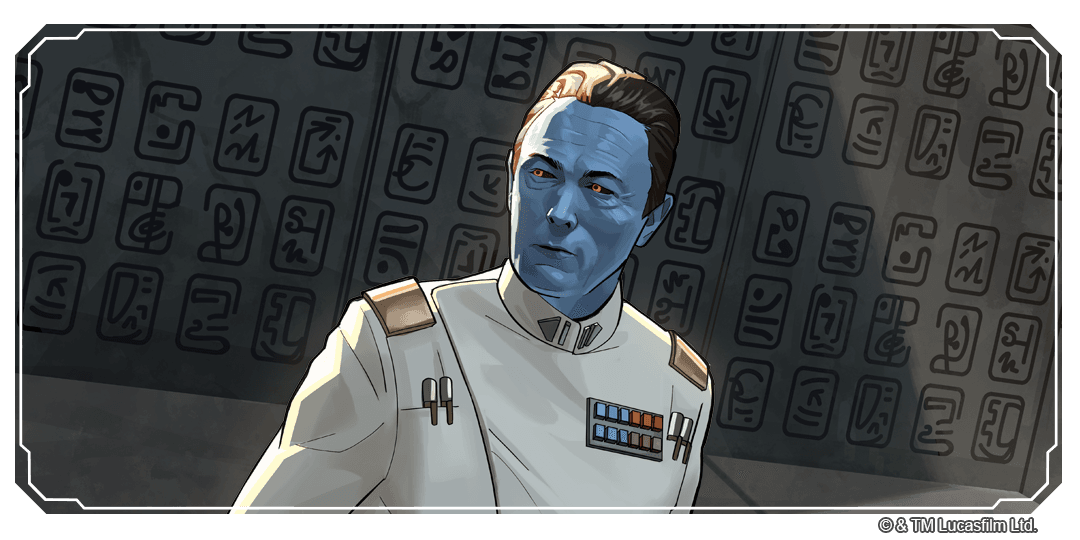
Aaron Miles' Grand Admiral Thrawn Deck
Leader: Grand Admiral Thrawn (Victory is Mine)
Base: Stygeon Spire
Ground Units (29):
3 Warrior of Clan Ordo
3 HK-47 (Exclamation: Die Meatbag!)
3 Secretive Sage
3 Doctor Pershing (Dedicated to Research)
3 Marrok (Mysterious Warrior)
3 0-0-0 (Translation and Torture)
2 Imperial Armored Commando
2 Koska Reeves (Warrior of Mandalore)
2 Honnah (Oink! Squee!)
2 The Cyborg Mech (Mysterious Threat)
3 Pre Vizsla (Strong-Willed Ruler)
Space Units (10):
3 Supremacy TIE/SF
2 B-Wing Rearguard
1 Justifier (Relentless)
3 Chimaera (A Frightening Reality)
1 Ravager (Final Imperial Command)
Events (11):
3 No Glory, Only Results
3 Stockpile
2 Lost and Forgotten
3 Single Reactor Ignition
Hey everyone, Ryan Miles here! I think Grand Admiral Thrawn (Ashes of the Empire, 4) can be extremely strong when paired with any aspect, but my preference for Aggression largely came from 2 cards: Marrok (Ashes of the Empire, 30) and Single Reactor Ignition (A Lawless Time, 44). Thrawn's unit side is one of the strongest that we've seen in the game, but demands the hefty task of surviving long enough to get there. Using Stygeon Spire (A Lawless Time, 27) as our base, we can off-aspect Stockpile (A Lawless Time, 171) to help slingshot our way right into deploying Thrawn. This deck is built around taking as little damage as possible with early Sentinel units in both arenas, and while Stockpile lets us deploy Thrawn on our opponent's 6-resource turn, often you'll want to wait! Once you have access to Thrawn's deploy, your opponent will need to be extremely aware of how many units they have in play, making sure that Thrawn can't deploy and quickly decimate their units. This plays right into Single Reactor Ignition, which punishes them for going too wide and can completely reset the game. Deploying your Thrawn after using Single Reactor Ignition can be devastating for a lot of strategies, and I generally aim to save my deploy for as long as I can. Typically, Stockpile is only effective to play on exactly the 6-resource turn, so we additionally have an off-aspect Ravager (Ashes of the Empire, 102) at the top in case we need to play the 6-8 resource turn a bit more honestly. In those situations, Lost and Forgotten (A Lawless Time, 133) can handle most problems while also providing crucial base healing, and The Cyborg Mech (Ashes of the Empire, 147) earns a slot with its ability to finish off most damaged units, including leaders. As opponents are forced to clear through our Sentinel units, The Cyborg Mech does a great job of finishing off opposing units and slowing the game down. Support units are also generally great with Thrawn's unit side, and while I find Doctor Pershing (Ashes of the Empire, 72) sufficient, cards like Migs Mayfeld (Ashes of the Empire, 168), Morgan Elsbeth (Ashes of the Empire, 50), or even the classic Cinta Kaz (Secrets of Power, 172) can be great inclusions as well. I'm hoping to see some exciting Grand Admiral Thrawn decks at the Galactic Championship, and I can't wait to see what players have in store!
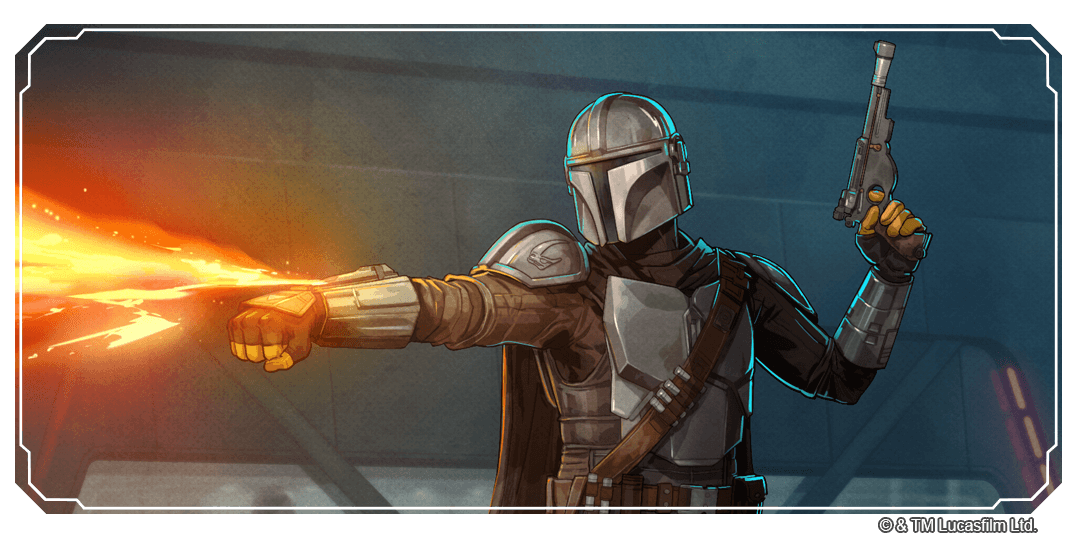
Danny Schaefer: The Mandalorian Deck
Leader: The Mandalorian (We Can't Keep Running)
Base: Colossus
Ground Units (28)
3 Karis Nemik (Freedom is a Pure Idea)
3 Chio Fain (Four-Armed Slicer)
3 Migs Mayfeld (How About a Toast?)
3 Honorable Nite Owl
3 Doctor Pershing (Dedicated to Research)
2 Outer Rim Constable
3 R5-D4 (Built for Adventure)
3 Hera Syndulla (Renegade General)
3 Grogu (Yes. Yes. Yes.)
2 Cinta Kaz (The Struggle Comes First)
Space Units (9)
3 Jedi Starfighter
3 Red Squadron X-Wing
3 Rebellious Hammerhead
Events (6)
3 Reckless Sacrifice
3 Aggressive Negotiations
Upgrades (7)
2 Nimble Prowess
3 Sudden Ferocity
2 Whistling Birds
Hey y'all, Danny Schaefer here with my favorite deck from Ashes of the Empire! What I love about this deck is its very unique playstyle and ability to attack from different angles to handle a diverse metagame. Against slower decks, you can leverage your immense volume of card draw and the power of Aggressive Negotiations (Secrets of Power, 179) to play as a combo deck, threatening huge attacks out of nowhere. Against more aggressive matchups you lean on the power of Colossus (Jump to Lightspeed, 21) and its 35(!) starting HP, along with efficient removal like Reckless Sacrifice (Ashes of the Empire, 163) and Support units like Migs Mayfeld (Ashes of the Empire, 168) and Honorable Nite Owl (Ashes of the Empire, 154) to help make favorable trades. This is by far my favorite Colossus deck because of the ease with which you can undo the drawback of starting with 1 less card in hand. While there is some minor tension playing Colossus and Aggressive Negotiations together, the upside of 5+ additional base HP more than offsets -1 power on an Aggressive Negotiations attack, given how many cards you typically end up with in the late game.
Fundamentally, this deck is built around the leader ability of The Mandalorian (Ashes of the Empire, 14) and the huge number of cards it can draw you over the course of a game. I always love an ability that takes something I already want to be doing (claiming initiative) and gives me an added reward for it. In the past, building around a leader who required you to always maintain initiative for full value might've been too risky and dependent on winning the die roll, but Ashes of the Empire provides so many tools to ensure you're taking and keeping initiative from the second round onward. Between a plethora of Support cards, the new Grogu (Ashes of the Empire, 155) Legendary unit, and a handful of powerful upgrades, you almost always have the action compression needed to finish your round before your opponent and keep the card draw flowing. This does mean you'll usually be playing slightly off-curve to afford your leader ability, but the raw power of your card advantage and late-game explosiveness more than make up for it.
More than anything, I love the unique lines of play this deck creates. With all the card draw you'll be doing, you almost always have a ton of options each round of what to resource, which card to play, and how to sequence your actions, allowing you to adapt to what your opponent is doing and leverage your skill advantage across numerous decision points. Depending on the matchup, you might be patiently building up to a huge attack later in the game or aggressively throwing out multiple cards per round to stay afloat, and it's really rewarding to navigate those assessments effectively. I especially love the huge plays you can make on your leader deploy turn by combining The Mandalorian's Support ability with Plot cards. Sometimes the best line is deploying your leader and plotting Cinta Kaz (Secrets of Power, 172) into play for incredible action compression, allowing you to immediately attack with 2 units and draw 2 cards. At other times, you might plot a Sudden Ferocity (Secrets of Power, 176) onto a unit then immediately attack with that unit using Support (basically a build-your-own Surprise Strike) while still holding up 3 resources for an Aggressive Negotiations attack with your leader next action. In either case, you're putting a lot of pressure on your opponent in a way that's difficult to play around.
Thanks for reading, and good luck at the Galactic Championship!
Share This Post