Twin Suns 101
May 28, 2026 | Written by Tyler Fultz
We've all come to Star WarsTM: Unlimited in fun and different ways. You may have been introduced to the game by a friend showing you their Premier format decks. (Hopefully they were kind and let you win that first game!) Or maybe you picked up a preconstructed Spotlight Deck featuring your favorite hero or villain to take to a tournament? Or maybe you discovered Star Wars: Unlimited through the Intro Battle: Hoth starter box? Hopefully you've gotten to try Star Wars: Unlimited's excellent draft and sealed play! But whichever way you got into the game, there are always more ways to play, and today I want to talk about one of my favorites: Twin Suns. Fantasy Flight Games is releasing preconstructed Twin Suns Decks this May; they'll be ready to play right out of the box, and I'm here to help you enjoy them!
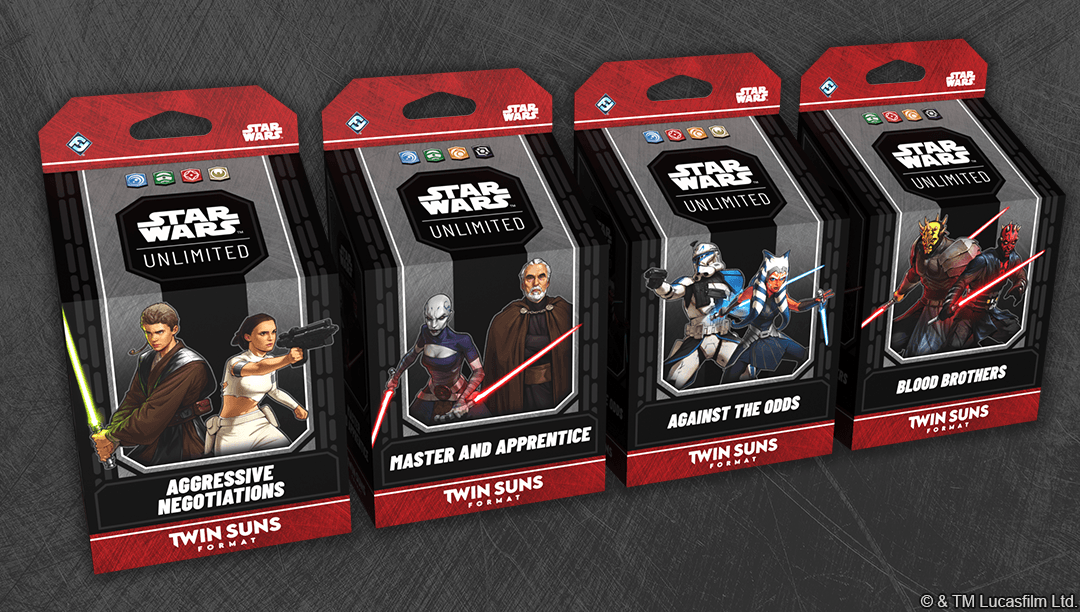
Let's start with the basics. A game of Twin Suns differs from other games of Star Wars: Unlimited in a few key ways:
- First and foremost, it's a multiplayer format designed for three or four players instead of the usual two.
- Second, the decks are very different. Twin Suns games are played with 80-card draw decks, with no more than one copy of any card and TWO leaders instead of the usual one. You also get your choice of a base card, as normal. The leaders and base can be of any aspects, provided you don't mix the Heroism and Villainy aspects.
- Third, the “pass” action is not allowed during a round of Twin Suns like it normally is. In addition, when you take the “claim” action, there are extra counter options to choose from in addition to the initiative. The two counters unique to Twin Suns are: the blast counter, which does one damage to each opponent's base, and the plan counter, which allows you to draw one card and then place a card from your hand beneath your deck.
- Fourth and finally, a game of Twin Suns ends differently than a two-player game of Star Wars: Unlimited. The first time a player is defeated by having their base health reduced to zero, the player who defeated them gets to heal 5 damage from their own base. That player being defeated also kicks off the final round of the game! The player who ends the final round with the most remaining base health will win the game.
But the biggest thing you need to know about Twin Suns is that it's FUN! The table talk between players and the unpredictable draws lead to games full of zany interactions, near-misses, and unforeseen outcomes that will leave you and your friends talking for weeks. Sounds like a fun time, right? It really is! But not every strategy you might have learned in your first game of Star Wars: Unlimited applies here. Like the pair of stars in its namesake, Twin Suns is in a completely different orbit as a format. So, let's talk about how a game of Twin Suns plays out and how you can leverage some basic strategies to come out on top!
1. Communicate! When a normal game of Star Wars: Unlimited takes place between two players, you can let the cards do the talking, and most anything you play is automatically threatening your opponent. But in a game of Twin Suns, your opponents don't know who you plan to attack. That big unit you just played could either hurt them (if it attacks them) or help them (if it attacks an opponent), so be clear about your plans! Letting others know your intentions—and getting their cooperation in your plan—will make all the difference between winning and losing.
2. Be aware of the table dynamic. What do I mean by “table dynamic”? I'm talking about the tendency players have in multiplayer games to police each other. Nobody wants to let the player in the lead stay there! You can expect that if one player jumps ahead with lots of units in play, or less damage on their base than the other players, they'll be checked. Usually, this means players enter the final round of the game with similar amounts of units and similar levels of base health. So don't stress if it seems like you're behind early in the game; it all typically evens back out.
3. Don't make yourself a target. That “table dynamic” we just talked about? It will come for you with a vengeance if you stick out to other players. Did you heal a bunch of damage off your base mid-game? Now you're a target. Did you play a powerful unit like War Juggernaut (Jump to Lightspeed, 170) that has a bonkers ability in Twin Suns? Now you're a target. Sometimes it's worth it to make less powerful moves just to stay off other players' radar.
4. Peak at the right time. So, if you've managed to follow the rules above, you've probably made it to what you suspect will be the last round of the game. Players likely have 15 or more damage on their bases, and it's time to go for broke and roll out your most powerful cards. Maybe it's time for a big Sentinel unit like Cruel Commandos (Secrets of Power, 86) or a mass-damage event like Bombing Run (Spark of Rebellion, 173). This also means it's time to deploy your leaders! Since they both enter play ready, you'll have far more control over the final round of the game. If you bring them out early, there's a chance they get defeated before they can affect the outcome.
5. Don't underestimate low-cost cards. Since you can't take the “pass” action to stall in a game of Twin Suns, low-cost cards are more powerful than they would be in a standard two-player game of Star Wars: Unlimited. If you can take more actions in a round than your opponents, then you'll find yourself at the end of the game with fuel to determine the outcome. Remember, you want to deploy your most powerful units and abilities at the last possible moment so the other players can't check you.
6. Hold unexpected healing and damage. In those final moments of the game, where the remaining players are jockeying for victory, there's going to be a lot of math happening. Players will be counting base damage, the power of remaining units, and figuring out who can win. This is where a few damage or healing coming out of nowhere can make all the difference. You could play Sneak Attack (Spark of Rebellion, 219) to bring out a Ruthless Raider (Spark of Rebellion, 134) and damage two opponents' bases, putting you suddenly on top. Or you could drop a 501st Liberator (Twilight of the Republic, 109) to heal 3 damage, making your base slightly healthier than theirs. Using the cards in your hand to mess with the final math can make the difference between victory and defeat.
All these techniques will give you the edge over your friends next time you decide to play. But where do you find a deck to try them out? Well, look no further than the upcoming Twin Suns Decks releasing this May! With preconstructed decks ready to go right out of the box, you've got the perfect opportunity to jump right in.
Each of the four Twin Suns Decks is built around a pair of iconic characters from the Clone Wars era. Count Dooku and his Sith compatriot Asajj Ventress bring forth armies of droids to menace the Republic in a potent Vigilance-Cunning-Command deck. Maul and his partner Savage Opress feature a slew of keywords and powered-up units to dominate with Aggression-Command-Cunning. Anakin Skywalker and Padmé Amidala count on their Clone Trooper support to trigger powerful effects in Aggression-Command-Vigilance. Finally, Ahsoka Tano and Rex feature a free-rolling mix of discounted events to improvise their way to victory with Aggression-Cunning-Vigilance. Let's look at how each deck can employ the strategies above to play its way to victory!
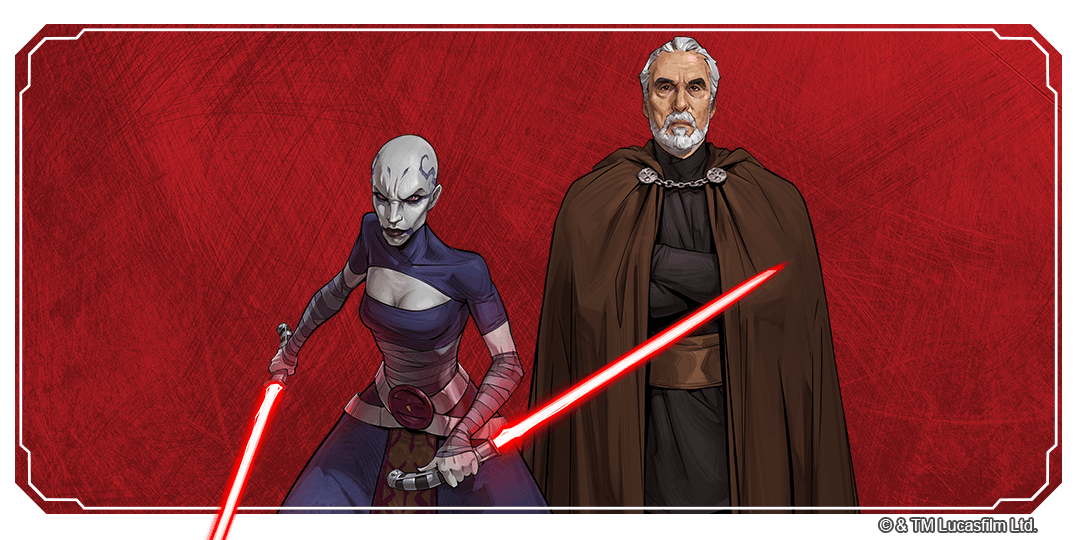
Master and Apprentice: Count Dooku and Asajj Ventress
This deck offers plenty of ways to turn the table dynamic in your favor, starting with the Count Dooku (Twin Suns 2026, 1) leader. His ability to heal your base and an opponent of your choice is a potent way to reward your friends while simultaneously creating Battle Droid (Twin Suns 2026, T1) tokens for yourself. These droids are particularly useful in a game of Twin Suns because they will rarely warrant an attack from an opponent but provide you with an excellent way to create additional actions. This allows you to stall and hold big plays for later in the round. Speaking of stalling, that should be your goal with this deck. Count Dooku's leader unit doesn't deploy until 7 resources, so prolonging the game until he can join Asajj Ventress (Twin Suns 2026, 7) on the battlefield is essential. Once he does deploy, his high power and Restore keyword will swing that final round towards victory.
In addition to the Dooku leader, cards like Wartime Refugee (Twin Suns 2026, 43), Barriss Offee (Twin Suns 2026, 78), and Wartime Mercenaries (Twin Suns 2026, 54) will help you curry favor at the table by doling out experience and healing to your friends. Protecting your base is essential throughout the game, but particularly in the final round. The General Grievous (Twin Suns 2026, 50) unit can be a powerful Sentinel in either context, discouraging attacks against you and pushing your opponents toward other targets. And if your opponents employ the same Sentinel-based strategy, a Battle Droid-discounted Encircle (Twin Suns 2026i, 61) can capture them at a critical time. Finally, for the last moments of the game, this deck has unexpected healing effects like Relief Frigate (Twin Suns 2026, 42) and King Katuunko (Twin Suns 2026, 16) to ensure the final math goes in its favor.
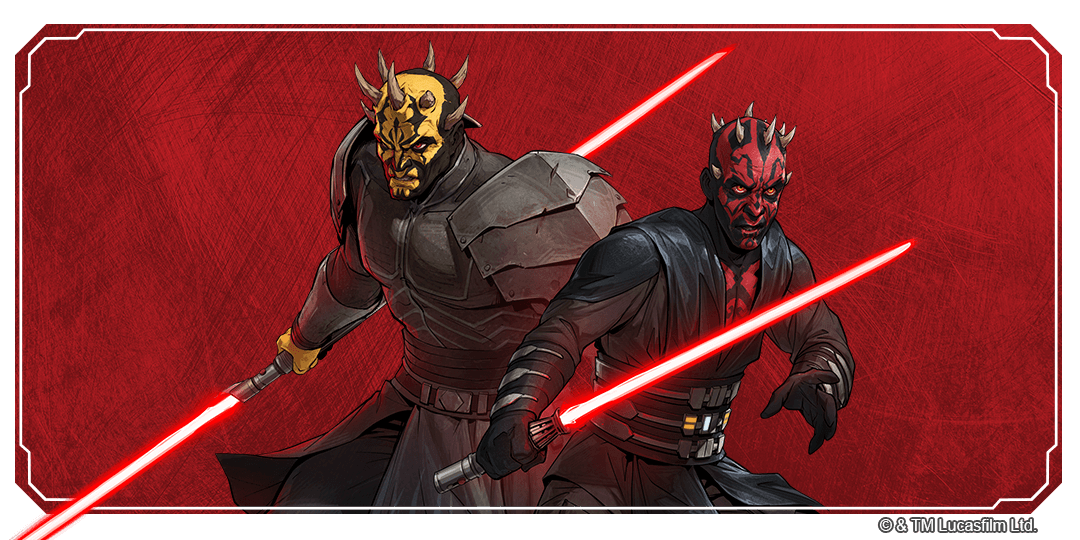
Blood Brothers: Maul and Savage Opress
This deck is all about creating big, threatening units that can strike an opponent's base at will. Using the leader ability of Savage Opress (Twin Suns 2026, 5) to fuel the experience-granting ability of Maul (Twin Suns 2026, 3) is at the heart of that. Once a unit has two or three experience tokens, it will be a difficult threat to stop! However, as with any Twin Suns deck, keeping the table dynamic in mind and not making yourself a target is essential. To that end, consider using Maul's ability on other players to curry favor and prolong the game. Much like Dooku, Maul's powerful unit side does not deploy until 7 resources, so making enemies with your powerful attacks could end the game before he's able to affect the outcome. Be careful!
Maul and Savage have other ways to build alliances at the table as well. Wartime Pirate (Twin Suns 2026, 66) lets you gift small 1-damage pings to your friends to the detriment of your enemies. And Arms Deal (Twin Suns 2026, 68) lets you pick which player gets to draw cards with you. In the final round, The Darksaber (Twin Suns 2026, 22) can ready one of your enormous units for a second attack while simultaneously creating a Sentinel that will protect your base. That attack could be made even more potent by Take Aim (Twin Suns 2026, 83), which grants the unit additional attack power and the Saboteur keyword to bypass Sentinels and Shields. Finally, if players are close in base health, Ruping Rider (Twin Suns 2026, 67) can deal base damage when it's played to knock a would-be victor off their perch.
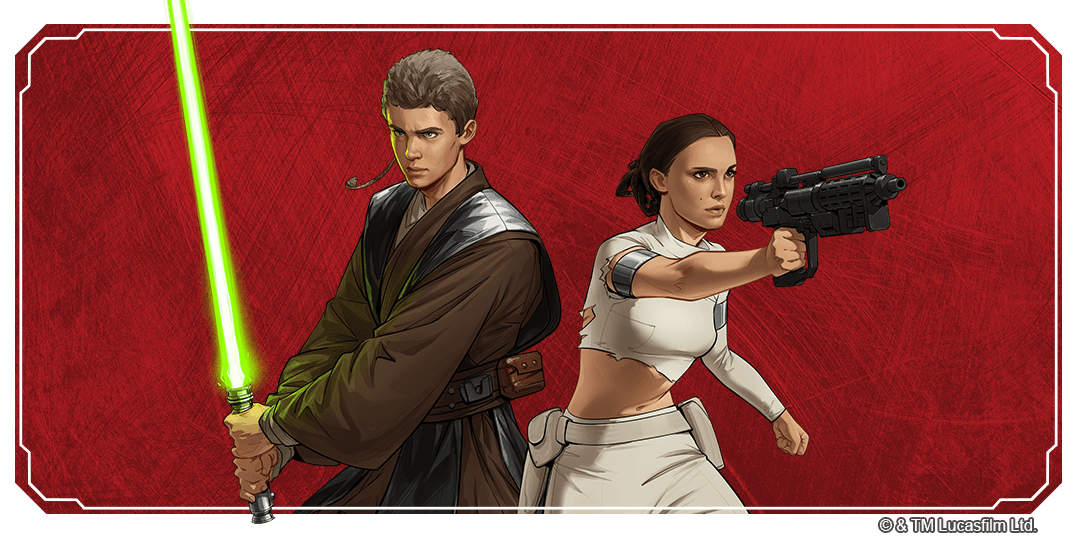
Aggressive Negotiations: Anakin Skywalker and Padmé Amidala
These next two leaders—Anakin Skywalker (Twin Suns 2026, 2) and Padmé Amidala (Twin Suns 2026, 4)—want multiple units to enter play each round and are rewarded with shields and extra attacks for making it happen. This volume of units not only triggers their abilities, but will also give you more actions to use later in the game. Since these leaders deploy on 5 and 6 resources respectively, you can be a little more aggressive than you would be with either of the villainous Twin Suns Decks we covered above. Consider deploying both leaders on 6 resources and trying to defeat the weakest opponent to secure that 5 healing for your base. When you do deploy, Anakin comes with the Sentinel keyword that will help secure your base against retaliatory attacks. That keyword can be made even more effective by using Secret Marriage (Twin Suns 2026, 46). Its Plot keyword will allow you to instantly play it alongside your leaders, giving them a Shield token and making Anakin a more potent Sentinel unit. The Shields that Anakin provides himself will also come in handy when you choose to use Padmé's leader ability to attack with units that entered play this phase. By attacking with a shielded unit, you can keep your opponent's units in check without sacrificing your own.
Another card in the deck that will help protect your base (and coincidentally fuel both of your leaders' abilities) is Yoda (Twin Suns 2026, 14). The two Clone Trooper (Twin Suns 2026, T2) tokens he creates instantly gain Sentinel, making them excellent blockers for the late game. This deck is also not without cards to help turn the table dynamic in your favor: Coruscanti Spy (Twin Suns 2026, 53), for example, is a cheap way to heal your friend's bases (or your own) at a crucial moment. Copies of Wartime Refugee and Wartime Pirate—which we covered earlier in this article—also allow you to give away damage and healing. Finally, like the other Twin Suns Decks, Anakin and Padmé's deck comes with ways to unexpectedly change the final math in their favor. Twilight (Twin Suns 2026, 41) can heal 3 damage from your base at a low cost, while Coleman Trebor (Twin Suns 2026, 19) can simultaneously heal your base and damage your opponents' for a mere 1 resource! Both cards are excellent to hold until the last possible moment to turn the tides in your favor.
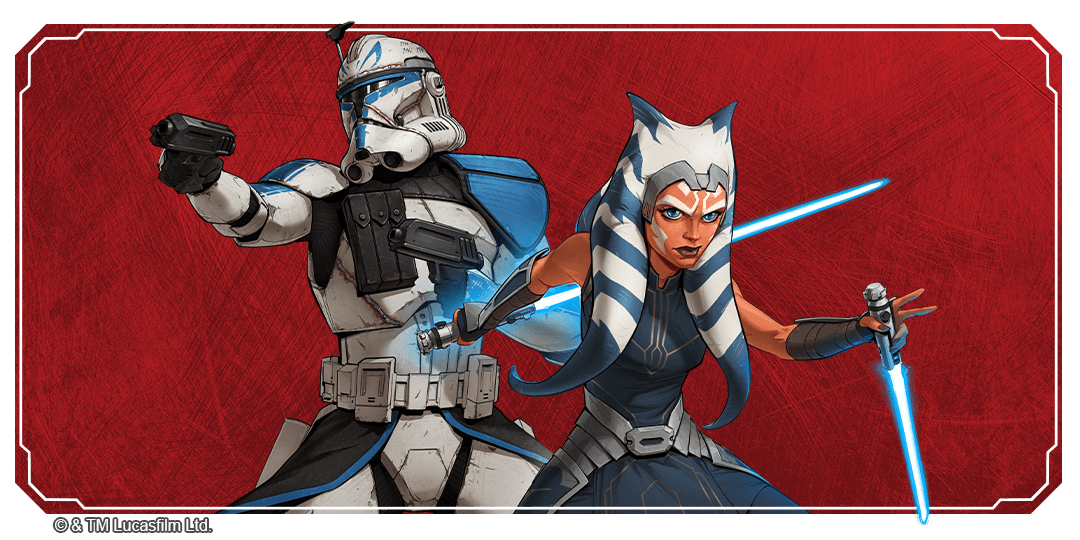
Improvised Tactics: Rex and Ahsoka
Finally, our last Twin Suns Deck features Rex (Twin Suns 2026, 6) and Ahsoka Tano (Twin Suns 2026, 8) as its leaders. This deck revolves around powerful discounted events and using their effects to push for victory. Like Anakin and Padmé, Ahsoka and Rex deploy on 5 and 6 resources respectively, meaning that they can play a potentially aggressive game where they use tools like Rex's DC-17s (Twin Suns 2026i, 63) to ready units and push damage. But taking the fight to the opponent isn't the only way this deck can get ahead! Rex's leader ability lets you ready an ally's units so that they can wreak more havoc on your collective enemies. Ahsoka, meanwhile, gives you visibility into what's on top of your deck and allows flexible and cheap card plays.
The Rex and Ahsoka deck also features cards to help bend the table dynamic in your favor. Chaotic Diversion (Twin Suns 2026, 31) allows you to ready a unit that can't come back to hurt you while also shielding your own. So, pick an opponent's unit that will do a lot of damage to someone else! The 501st Veteran (Twin Suns 2026, 20) comes with both the Sentinel and Grit keywords, meaning it's a low-threat unit provided your opponents don't attack it, and a powerful attacker if they do. It's the perfect clap-back combo of keywords! Finally, perhaps more than any of the Twin Suns preconstructed decks, this deck has powerful tools for dominating the final round. Fearless Attack (Twin Suns 2026, 84) can give a unit a power boost if your opponent has built a large board. Vanquish the Legion (Twin Suns 2026, 48) can make your opponents' units in the ground arena practically melt away for a turn. Both of these events can also be discounted by Rex's ability or Ahsoka's Lightsabers (Twin Suns 2026, 35). Abandoned the Order (Twin Suns 2026, 37) gives a ready unit the powerful combo effect of returning an opponent's unit to hand (great for dealing with a pesky Sentinel) and giving the upgraded unit Restore to mess with end-of-game math.
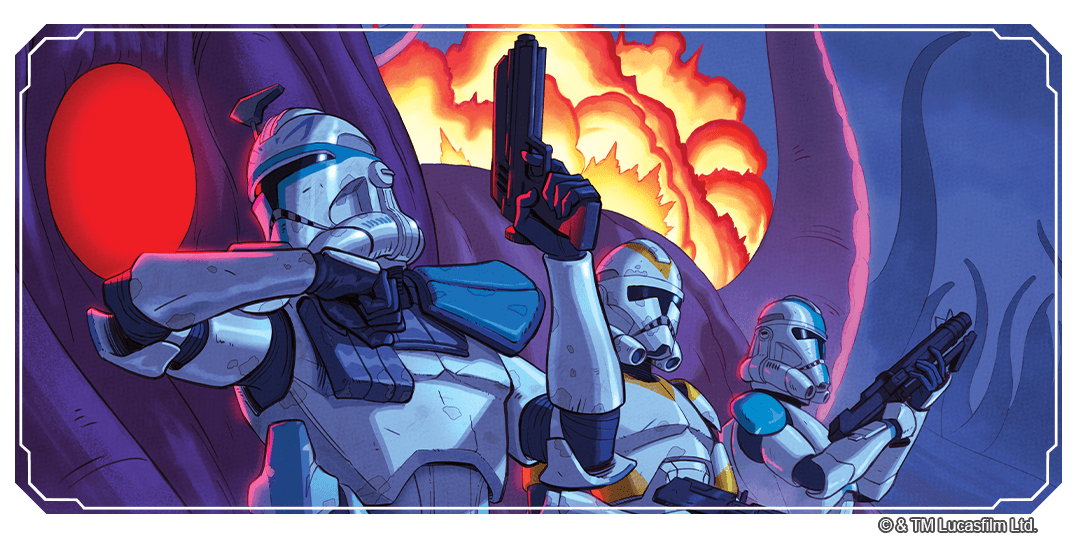
Each of these Twin Suns Decks for 2026 is full of powerful and fun cards that will boost your multiplayer experience. They will give any player the tools they need to execute on the best free-for-all strategies right out of the box. If you haven't yet experienced the wacky and joyous time that is Twin Suns, this is your chance!
Share This Post